Bright Haven Electric LLC

Bright Haven Electric LLC
Grounded in Reliability, Powered by Expertise
A stylized roadmap showing the path to a successful electrical installation, symbolizing an electrician's career path.

Your career is a journey with many paths. Choosing the right one early on makes all the difference.

Welcome to Part 6 of our series. We’ve talked about the mindset and the day-to-day realities of the job. Now, let’s zoom out and look at the big picture: your career path. Think of your career as a mountain. There are many trails to the top—some are paved and steady, others are rocky and steep. There are no wrong answers, but understanding the terrain is the key to a successful climb.

This chapter is about the strategic decisions you’ll make, from your first job to your ultimate career goals. We’ll cover the foundational choices, the major milestones, and the one piece of advice every apprentice needs if they dream of one day owning their own truck.

The First Step: Where Do You Start?

Your first job sets the foundation for your entire career. While many start in residential construction, it’s important to understand the landscape.

The Residential “Half-Measure”

Starting in residential new construction is a common entry point. However, be aware that some in the commercial and industrial sectors may view this experience as limited. The “golden ticket” is finding a mixed shop where you get exposure to different types of work early on.

The Proactive “Triple-Threat” Strategy

The most driven apprentices don’t just wait for one opportunity. They attack from three angles at once: 1) Work a residential job to gain hands-on experience and income. 2) Enroll in a trade school to learn the theory. 3) Continuously put in applications at commercial, industrial, or union shops to advance to the next level.

The Big Decision: Union vs. Non-Union (Merit) Shop

This is one of the most significant choices you’ll make. Both paths can lead to success, but they offer very different structures and guarantees.

The Union Path

The Promise: Structure and Security. The Union provides a defined career path that nearly guarantees commercial and industrial experience. It also typically pays for your trade schooling and provides a benefits package that ensures a living wage, something not always required in non-union shops.

The Merit Shop Path

The Promise: Flexibility and Opportunity. Non-union shops can offer more flexibility and potentially faster advancement if you prove yourself. However, the onus is on you to vet the company. Ensure they have a Master Electrician, a good reputation, and a willingness to invest in your growth.

“Based on my own journey, I would advise any new apprentice to strongly consider the Union. It offers protections against exploitation and a clear, structured path to becoming a well-rounded electrician.”

The Leap to Journeyman: A Shift in Mindset and Pay

Graduating from apprentice to journeyman is more than just a technical promotion; it’s a significant step in personal and professional maturity. It’s like going from a high-schooler to a post-grad. You’re no longer just learning the trade; you’re expected to have real goals, refined social skills, and the motivation to lead.

The Most Surprising Part: The Pay Jump

The transition to journeyman often comes with a significant increase in pay—sometimes $300 a week or more. That’s a life-changing amount of money, and it’s a direct reflection of the value and responsibility you’ve earned.

The Summit: Thinking Like a Business Owner from Day One

Even if you don’t plan to own a company, learning the business side of the trade is crucial for your long-term success and self-preservation.

Learn More Than Just the Wires

Take the time to understand the basics of employment law, business structures (LLC vs. Sole Proprietor), and tax forms. Why? Because one day you might be the one filing those forms. More importantly, understanding these things *now* helps you spot red flags. If you notice something is off with how an employer is handling their business, it could be a sign of instability—you don’t want to work for a company that might be out of business in a year.

What’s Next?

With a strategic map in hand, it’s time to understand the rules of the road. In Part 7, we will demystify the all-important topic of electrical licensing and what it takes to earn that figurative “golden ticket” in our trade.

A clean and organized 400A residential electrical service installation, representing professional electrical work.

Professionalism is visible in everything you do, from your appearance to the finished product.

Welcome to Part 5 of our series. So far, we’ve covered the what and the why of the electrical trade. Now, we’re focusing on the *how*—not how to wire an outlet, but how to conduct yourself as a professional. This is arguably the most important factor in your long-term success.

Your technical skills will grow over time, but your reputation is built every single day. It’s built on your appearance, your attitude, your mindset, and how you handle adversity. The advice in this chapter is about building a reputation that makes people want you on their team and, eventually, in their homes.

1. The First Impression: Appearance Matters

How you present yourself sends a powerful message. It tells your team and your customers whether you take yourself and your work seriously. The standards can differ depending on the job site.

On a Construction Site

Appearance is generally more relaxed, but safety and durability are key. Your clothes will get dirty and damaged, but they should still be professional: durable work pants (like Carhartt or Dickies), proper work boots, and a shirt that isn’t baggy or unsafe.

On a Service Call

The standard is much higher. You are a guest in someone’s home or office. If you’re given a company work shirt, it should be clean. Good grooming is essential—clean fingernails, tidy hair. Looking and smelling clean isn’t just polite; it builds customer trust.

“Looking and smelling good helps you have a good day. It’s a form of self-respect that translates into respect for the work and the customer.”

2. The Proactive Mindset: Thinking Ahead

The most valuable apprentices are the ones who don’t wait to be told what to do. They observe, learn the workflow, and start anticipating needs. This is how you go from being a helper to being an essential part of the operation.

Master the Daily Rhythm

As an apprentice, I made it my mission to learn the daily setup and breakdown routine. As soon as the van stopped, I was rolling out the power cords and neatly arranging the work boxes. At the end of the day, I had everything cleaned and put away in reverse. This simple, proactive habit meant my journeyman could start the real work faster and leave the site quicker. It made their day easier, which in turn made my position more valuable.

3. Beyond “What” to “Why”: A Cautionary Tale

Just doing what you’re told isn’t enough. You have to understand *why* you’re doing it. Failure to grasp the ‘why’ can lead to disastrous and costly mistakes.

The Apprentice Who Stripped Too Much

I once had an apprentice tasked with preparing wires in new work boxes. He understood the “what”—strip the sheathing off the wires. However, he didn’t understand the “why”—that you only strip the very ends of the individual conductors for a device connection. He stripped the insulation off the conductors all the way back into the box. This created a dangerous situation where electricity could easily arc between the wires, creating a major fire hazard. We had to rerun all of those wires, wasting hours of labor and materials, all because the “why” was missed.

4. Professionalism Under Pressure: Handling Adversity

There will be tough days. There will be difficult people. Whether it’s a demanding customer or a frustrated journeyman, your ability to remain professional is what will define you.

“Remember this is but a step on a long path. The challenges you face today will fade, but the reputation you build by handling them with grace will last. Without the bad times, you wouldn’t truly appreciate the good ones.”

When you’re facing adversity, remind yourself what you’re working for. Your personal goals and your commitment to your craft are your anchor. Let that purpose guide your actions, not the temporary frustration of the moment.

What’s Next?

With a professional mindset as your foundation, you’re ready to start thinking long-term. In Part 6, we will dive into “Planning Your Career Path” and look at the different roads you can take as you progress from apprentice to journeyman and beyond.

Chadwick Ferguson, Master Electrician and owner of Bright Haven Electric, offering advice to new apprentices.

Advice from over two decades in the electrical trade.

Welcome to Part 4 of our guide. We’ve discussed the mindset, the career paths, and the demands of the trade. Now, let’s get practical. You’ve decided to take the leap, and your first day is approaching. How do you go from being the new, expendable apprentice to an irreplaceable member of the team?

This chapter is about the actionable advice that makes a difference. It’s about understanding what your journeyman and your boss are *really* looking for, even if they don’t say it directly. These are the lessons that will help you stand out and build a reputation for excellence from your very first week.

1. Be an Asset From Day One

An employer’s primary goal when hiring an apprentice is to find someone who can contribute to the team without draining resources. Your mission is to show up as a prepared asset, not a project to be managed. This isn’t just an entry-level job; it’s a “finisher’s” job. Be someone who solves problems, not creates them.

Have Your Resources

Arrive with your own reliable transportation and the basic hand tools required for the job. Being prepared shows initiative and respect for the trade.

Be Attentive

Your most valuable tool is your attention. Watch everything. Listen to everything. The more you absorb, the faster you become a contributor.

Ask “What’s Next?”

The two best words you can say when you finish a task are, “What’s next?” It signals eagerness and a readiness to work, no matter how menial the task.

2. Learn the Language: Vernacular vs. Professional

Being attentive means learning the processes, and a huge part of that is learning the language of the job site. You’ll quickly discover that there are two languages: the job site vernacular and the professional terminology. Your ability to anticipate needs and communicate effectively depends on knowing both.

From Job Site Slang to Universal Terms

On the job, you’ll hear electricians call for a “twirly,” “dikes,” or a “wiggy.” A good apprentice quickly learns this means a rapid-drive screwdriver, diagonal pliers, and a voltage meter. But a great apprentice also learns the correct terms. Why? Because the plumber on site won’t know what a “wiggy” is, but they’ll understand “volt meter.” More importantly, your customer will only understand professional language. Knowing the right terms allows you to communicate clearly with everyone, elevating your professionalism.

3. Balance Speed with Safety: Never Shake Hands with Danger

You will inevitably feel pressure to work faster. This is normal. However, that pressure should never come at the expense of safety. If you find yourself in a situation where you feel rushed and are taking safety for granted, you must stop and address it.

“You never want to shake hands with danger.” If you feel pressured to use the wrong tool, stand on the top step of a ladder, or work in an unsafe position, have a conversation about it. A good boss would rather lose a few minutes of time than lose you to an injury.

4. How to Listen and When to Speak

The fastest way to earn respect is to become an exceptional listener. But that’s more than just being quiet. It’s about active engagement and knowing how to “read the room.”

Practice Active Listening

When given instructions, make eye contact. When you’re done, repeat the key points back: “Okay, so you want me to run the conduit from this box to that one, using one-hole straps every three feet. Got it.” This confirms you understood and saves hours of rework.

Know When to Ask Questions

If you’re stuck, it’s crucial to ask for help. However, don’t interrupt your journeyman in the middle of a critical or dangerous task. Wait for a pause in the action. If you have deeper, theoretical questions, save them for lunch, the ride home, or research them on your own time. Respecting the company’s time is paramount.

Earn Your Voice

As an apprentice, your primary role is to learn and support. You will have opinions and ideas, but the beginning of your career is the time to listen. Put your own ideas away until you’ve earned the experience to back them up. Absorb the wisdom around you first; your time to contribute your own will come.

What’s Next?

Now that we’ve covered the core advice for getting started, Part 5 will take a deeper dive into the specific habits and mindsets that define long-term professionalism in the electrical trade.

A backup generator powering a home during a storm, symbolizing the resilience needed in the electrical trade.

Success in the trades is about resilience—powering through challenges to get the job done right.

Welcome to Part 3 of our guide for aspiring electricians. We’ve talked about the right mindset and the different paths your career can take. Now, we need to ask the most important question: is this trade truly the right fit for you? It’s a question that goes deeper than just liking to work with your hands.

A long and successful career as an electrician requires a unique combination of physical endurance, mental sharpness, and emotional resilience. With that in mind, this chapter is a reality check. Let’s talk about what you can honestly expect on the job—the good, the bad, and what it takes to thrive.

The Physical Reality: More Than Just Strength

The work is physically demanding, but not always in the way you might think. It’s not about being a bodybuilder; it’s about endurance, agility, and a high tolerance for discomfort. You’ll develop “near acrobat skills” navigating tight attics and cramped crawlspaces. You’ll end most days with minor cuts and abrasions. Your clothes will get damaged. This is the reality of the job.

Ultimately, your ability to thrive physically comes down to preparation. The work itself is manageable if you show up ready. That means:

Dress for the Job

Your physical comfort and safety start with the right gear for the conditions, whether it’s a hot attic or a cold crawlspace.

Mental Constitution

The job is as much a mental challenge as a physical one. You must have the drive to push through discomfort to see the task to completion.

Stay Prepared

Show up to the job site well-rested and well-fed. External stress from hunger or fatigue drains the emotional energy needed to stay motivated.

The emotional energy it takes to make that fifth trip into a hot, dusty attic is often greater than the physical energy. Being prepared minimizes that drain and lets you focus on the task.

The Mental Challenge: “The Thinking Trade” in Action

More than any physical test, your success will be defined by your ability to think. This isn’t an exaggeration. Deep knowledge is what separates an installer from a true problem-solver and makes you invaluable.

Knowing the Code Saves Jobs

Recently, I encountered a situation where a service cable was in contact with insulation. An older version of the electrical code would have required a massive downgrade of the circuit breaker, making it too small for the load. But knowing the most current 2023 NEC allowed me to confirm that this specific derating rule had been removed. That knowledge saved the client a costly, unnecessary upgrade.

Technical Knowledge Prevents Failure

Knowing how to calculate conduit fill, understanding when you can downsize a neutral conductor, or using the proper technique for a long wire pull aren’t just “nice to know”—they are the difference between a smooth, successful installation and hours of frustrating, wasted labor trying to fix a jammed pipe.

The Emotional Journey: Navigating Peaks and Valleys

Some days in this trade feel like magic. You show up on time, nothing falls out of the van, the customer is happy to see you, you have every part you need, and the work just flows. On those “peak” days, you feel like you’re the best in the world at what you do.

On the other hand, there are the “valleys.” The van gets a flat tire, a tool breaks, a part is missing, a previous contractor’s work is a mess, and every step of the job fights you. These are the days that test your character.

“The key is to not get too high on the peaks or too low on the valleys. The good days are a result of your preparation meeting opportunity. The bad days are a test of your professionalism and your ability to solve problems under pressure.”

Learning to manage that emotional swing and show up with a consistent, professional attitude every single day is one of the most important skills you will develop.

The Interpersonal Test: Dealing with People

Whether it’s coworkers on a busy construction site or a homeowner watching over your shoulder, the electrical trade is fundamentally a people business. On any given day, you might encounter difficult personalities, work with someone who is having a bad day, or even deal with clients who don’t pay on time.

Ultimately, your job is to remain professional. Focus on the quality of your work and your attitude of service, and let the excellence of your craft be your ultimate response. In fact, your reputation isn’t just built on how you wire a panel; it’s built on how you handle yourself when things get tough.

What’s Next?

If this reality check excites you more than it intimidates you, then you’re on the right track. In Part 4, we’ll get into specific, actionable advice for landing your first job as an apprentice in the electrical trades.

A four-panel cartoon illustrating different electrical career paths: Union vs. Non-Union, New Construction vs. Service, Agricultural work, and Respecting Spaces.

Explore the foundational choices and diverse paths in the electrical trade, from team environments to the paramount importance of respecting every client’s space.

Welcome back to our 18-part series on becoming an electrician. In our introduction, we focused on the foundational mindset of ownership and continuous learning. Now, we’re zooming out to look at the map of the electrical trade itself. Where will you fit in? What kind of work energizes you?

The image for this chapter breaks down the foundational decisions and mindsets you’ll encounter. Your career will be shaped by:

Team Environment

The structure and support you work within (Union vs. Non-Union).

Primary Mission

The mindset for building new vs. solving problems in existing spaces.

Area of Expertise

The unique opportunities in our region, especially in agricultural work.

Professional Standard

The non-negotiable principle of respecting every client’s space.

This article will dive into each of these areas, giving you a real-world perspective on what each path looks like, especially here in West Central Minnesota.

New Construction vs. Service: The Two Core Mindsets

Most electrical work falls into two broad categories, and each requires a completely different approach and mindset. Understanding this difference is key to finding where you’ll thrive.

New Construction

The Goal: Speed and efficiency. You’re building from a clean blueprint. The priority is to get everything done as quickly, cheaply, and safely as possible, often alongside dozens of other tradespeople.

Service Work

The Goal: Precision and trust. You are a guest in someone’s home or business. The mindset shifts to cleanliness, clear communication, and surgically solving a problem with the existing infrastructure.

“In new construction, you share a portable toilet with the crew. In service work, you ask permission to use a client’s restroom. That one difference explains the entire shift in mindset. You go from being a builder to being a trusted guest and problem-solver.”

Specialty Work: The Key to a Lasting Career in Our Area

Beyond the two main paths lies specialty work. In a region like West Central Minnesota, with a strong DIY culture for simple tasks, becoming a specialist in complex systems is the key to building a high-value, sustainable career. While some homeowners might replace an outlet, they won’t be engineering a power system for their farm.

The most critical specialty in our area is undoubtedly **Agricultural Electrical Work**. This is where true expertise shines.

A detailed view of an industrial controls panel, representing the complex agricultural electrical work in Minnesota.

Modern farm wiring is a highly specialized, industrial-level skill.

A Deeper Look: The Unique Challenge of Agricultural Wiring

For an electrician used to residential work, a farm is a different world. It’s not just about wiring a structure; it’s about engineering a system to survive a constant assault while protecting uniquely sensitive assets—livestock.

The Environment is an Active Adversary

In a barn, the air itself is corrosive due to ammonia and moisture. Dust from feed and grain is combustible. Rodents are a constant threat to wiring. Every component must be chosen to withstand this relentless attack.

The Invisible Threat to Livestock

Stray voltage—tiny electrical potentials you can’t feel—can be stressful or harmful to animals, affecting their health and productivity. Protecting against it requires advanced techniques like equipotential planes, a concept almost entirely absent from residential wiring.

Industrial-Scale Power Demands

A modern farm is a small industrial campus. The power needed for grain dryers, augers, and large fans dwarfs residential loads. This requires a deep understanding of multi-building distribution, heavy motor loads, and often, three-phase power systems.

Where to Start Your Journey

While I started in non-union new construction, I would advise anyone today to strongly consider the **Union**. It provides a structured path with protections for training, pay, benefits, and workplace conduct that are not always guaranteed elsewhere. Regardless of the path you choose, a foundation in new construction is invaluable for learning the fundamentals at a fast pace.

What’s Next?

Now that we’ve mapped out the different fields, the next question is a personal one: is this trade right for you? In Part 3, we will cover the physical and psychological requirements of a long and successful career as an electrician.

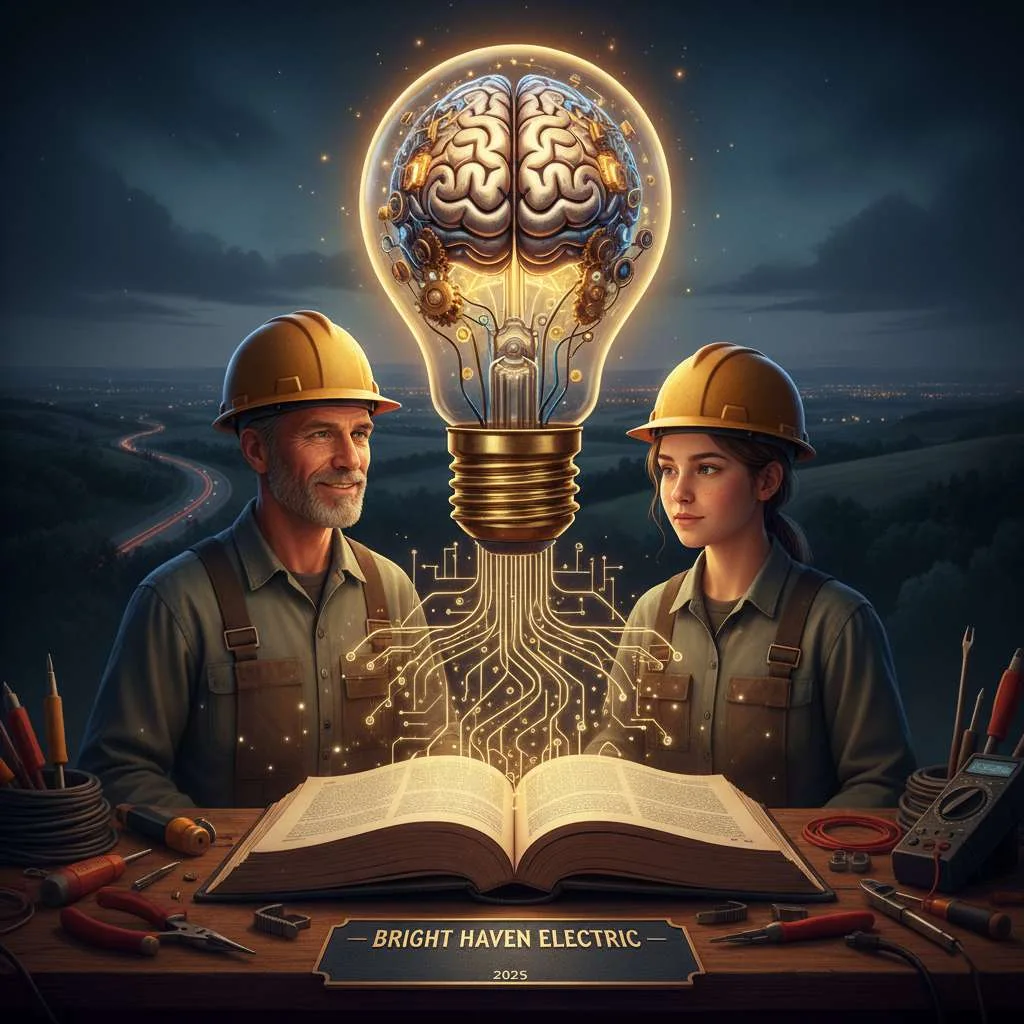
Two electricians look towards a glowing lightbulb with a mechanical brain, connected to a book of tools, symbolizing the electrical trade.

Embark on your journey into the electrical trade. This image captures the essence of constant learning, the pride of craftsmanship, and the value of mentorship.

Thinking about a career in the electrical trade? For a motivated individual in West Central Minnesota, there has never been a better time. This is the first article in an 18-part series designed to be your introductory guide—a roadmap from your first day on the job site to becoming a well-rounded, skilled, and respected professional.

My name is Chadwick Ferguson, and I’m the Master Electrician and owner of Bright Haven Electric. I created this guide with my own children in mind, thinking about the skills and values that truly last. A trade is a legacy. It’s the ability to create, to solve problems, and to provide for a family with your own two hands—a skill that can never be taken away. My goal is to pass on the lessons I’ve learned, both on the job site and in life, to help you start your journey on the right foot.

Lesson 1: Never Stop Learning

The first thing to understand is that the electrical trade is “the thinking trade.” Success isn’t just about being strong or good with your hands—it’s about knowing the code, understanding theory, and constantly learning. Your career is a 50/50 split: 50% is what you do on the job site, and the other 50% is the knowledge you build on your own time. Reading this guide is a fantastic first step. Never stop seeking the ‘what,’ the ‘how,’ and most importantly, the ‘why’ behind every task.

Lesson 2: Ownership Defines a Craftsperson

There’s a phrase you’ll sometimes hear on a job site: “Looks good from my house.” That phrase has no place in a true professional’s vocabulary. The single most important lesson I wish I had understood on day one is this: **if you touch it, you own it.**

Work to Completion

Don’t leave tasks half-finished for someone else to deal with. A true professional sees every job through to the very end.

Leave It Better

This applies to everything from wiring a panel to cleaning your work area. The final impression is defined by how you leave things.

Take Pride in the Result

The quality of your work is a direct reflection of your character. Never settle for “good enough” when “right” is achievable.

If you aren’t willing to do a task correctly and completely, you cannot expect others to do it for you. This sense of ownership is what separates a worker from a true craftsperson.

Lesson 3: Stay Humble, Stay Curious

No matter how far you go in this trade, there is always more to learn. I’ve been a Master Electrician for years, and I still learn things from first-year apprentices. Everyone brings a different life experience to the job site, and a wise electrician learns to listen with an open mind.

“It’s important to stand outside of yourself and realize we all have different experiences and some may have learned lessons you might not have, no matter the age difference.”

The moment you think you know everything is the moment you stop growing. Mentorship is a two-way street. Be a good student, but never be afraid to ask questions or share what you see. That shared knowledge is what makes a team strong and what will make you a valuable asset.

What’s Next in the Series?

In Part 2, we will dive into the specifics of the electrical trade, exploring the different career paths from residential and commercial to industrial and specialty work. Welcome to the journey.

A Minnesota farmhouse at dusk, secured and automated with smart lighting from Bright Haven Electric.

A truly smart home works for you, providing security and convenience automatically.

Hello neighbors, Chadwick Ferguson here from Bright Haven Electric. As a Master Electrician working across West Central Minnesota, I’ve spent years in your homes, barns, and workshops. Lately, I’ve been getting more questions about “smart home” technology. Most folks think of voice assistants like Alexa or Google, but a truly smart home is much more.

Think of it less as a home you can talk to, and more as a home that works for you. It’s a system that automates tasks, improves security, saves money, and makes life easier, especially out here where properties are large and self-reliance is key. The real power isn’t asking a speaker to turn on a light; it’s the light turning on automatically when you walk into a dark room with your hands full. That’s where the real value lies.

Why Smart Technology is a Practical Tool in West Central Minnesota

In our rural communities, smart technology solves real, everyday problems.

Peace of Mind Across Your Acreage

When your nearest neighbor is a quarter-mile away, security is a top concern. Modern smart cameras, including 4G/LTE cellular models that don’t need Wi-Fi, can monitor long driveways, barns, and fuel tanks, sending alerts directly to your phone. Smart locks on outbuildings allow you to grant temporary access to a hired hand without handing over a key. It’s a digital watchman that brings true peace of mind.

Winning the War on Winter Utility Bills

We all know the feeling of opening a utility bill in January. A smart thermostat is one of the most effective investments a Minnesotan can make. By learning your schedule and using geofencing to know when you’re home or away, it can cut your heating and cooling bills significantly. This technology pays for itself by preventing you from needlessly heating an empty house.

Reclaiming Your Time

Life out here is demanding. Smart automation helps you reclaim time. Instead of bundling up to turn on lights in the workshop on a frigid night, you can tap a button on your phone. Better yet, we can install a smart outlet for your engine block heater. Schedule it to turn on automatically at 4 a.m. to ensure your truck starts reliably at 6 a.m., all while saving a significant amount of wasted electricity.

The Building Blocks of a Smarter Property

Getting started is easier than you think. The key is to focus on the solutions that solve your biggest challenges first.

Smart Security

A network of cameras, sensors, and locks that monitor your entire property. We ensure you have weatherproof outlets and the necessary wiring in the right places.

Smart Climate Control

A smart thermostat that learns your routines and can be controlled from anywhere, ensuring you only pay to heat or cool your home when you need to.

Smart Lighting

From individual bulbs to professionally installed smart switches, we can automate every light on your property for convenience and security.

Smart Plugs & Outlets

These make almost any appliance “smart” and are perfect for scheduling engine block heaters, coffee makers, or fans.

The Most Important Step: Your Electrical Foundation

Here’s a crucial piece of advice from my 20+ years as an electrician: your smart home is only as reliable as the electrical system it’s built on. Adding dozens of new devices, especially a high-draw appliance like an EV charger, puts a significant strain on your electrical panel.

Before and after comparison of an old fuse box and a new, modern electrical panel installed by a professional electrician.

A modern electrical panel is the essential foundation for a reliable and safe smart home system.

This is why our process always starts with a thorough site assessment. We don’t just look at where to put a device; we evaluate your entire system.

Panel Capacity Check

Can your current breaker box handle the extra load? Many older homes and farms in our area have 60 or 100-amp panels that are already maxed out. Overloading an old panel is a serious fire hazard.

The Need for a Panel Upgrade

If your panel is outdated, lacks space, or is a known hazardous brand (like FPE Stab-Lok or Zinsco), an electrical panel upgrade isn’t just recommended—it’s essential for safety. A new, modern panel provides the capacity and safety features needed for a smart home and future technologies.

Proper Wiring

Smart switches and thermostats often require specific wiring, like a neutral wire or a C-wire, that may be missing in older homes. As licensed electricians, we can safely run these new wires, ensuring your smart devices have the stable power they need to function without glitches.

While some smart devices are plug-and-play, anything that involves your home’s wiring should be handled by a professional. An incorrect installation can damage your new smart devices, create a fire risk, or simply not work when you need it most.

Your Roadmap to a Smarter Property

1. Start with a Pain Point

Don’t automate everything at once. Pick one problem—high heating bills or property security—and start there.

2. Plan for the Future

Think about what you might want to add later. Choosing a flexible system from the start will make expansion easier.

3. Consult a Professional

Before you buy, let us perform an electrical assessment. We can tell you if your panel is ready, what upgrades might be needed, and help you plan a system that is safe, reliable, and perfectly suited to your West Central Minnesota property.

Ready for the Details?

Now that you understand the benefits and the foundational needs, it’s time to explore the specific gear and installation process.

Continue to Part 2: Your Practical Installation Guide to learn about choosing the right technology (Wi-Fi vs. Zigbee), our professional installation roadmap, and specific product recommendations for rural properties.

At Bright Haven Electric, we’re here to help you navigate this technology. If you have questions or need a hand with an installation, give us a call for a free, no-obligation estimate.

Schedule a Free Smart Home Consultation
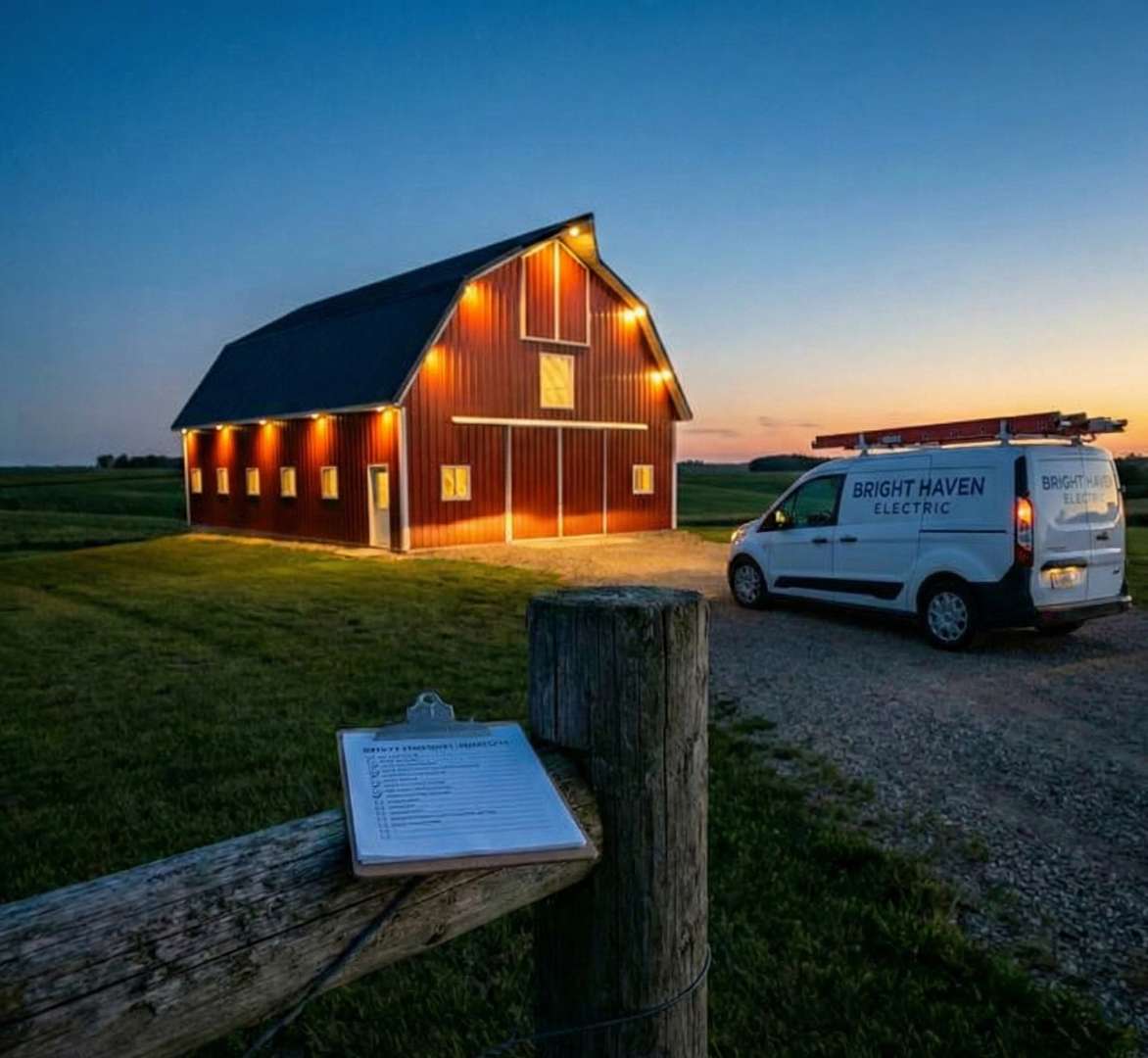
A modern Minnesota farm at sunset with solar panels on the barn and a home battery unit, representing energy independence.

A professional plan makes the journey to energy independence smooth and successful.

In our last post, we explored the powerful benefits of Distributed Energy Resources (DERs)—like solar, batteries, and generators—for property owners in West Central Minnesota. You know the “why”; now it’s time for the “how.”

This guide provides a clear, step-by-step roadmap for installing a DER system. While it may seem complex, the right professional partner can make the journey to energy independence successful.

Step 1: The Critical Check-Up: Your Electrical Panel

Before any new energy equipment is installed, we have to look at the heart of your property’s electrical system: the main panel. Many older homes and farm buildings in our area have 60A or 100A panels. Adding a solar array or battery system often requires an upgrade to a modern 200A panel to ensure safety and compliance.

Key Warning Signs You May Need an Upgrade:

Flickering Lights

Lights that flicker or dim when a large appliance kicks on are a classic sign of an overloaded system.

Hazardous Panel Brand

Your panel is a known hazardous brand, such as Federal Pacific (FPE) or Zinsco, which have high failure rates.

Frequent Breaker Trips

You find yourself resetting breakers regularly, indicating your circuits can’t handle the electrical demand.

Future Upgrades Planned

You plan to add an EV charger, heat pump, hot tub, or other major electrical load in the near future.

A panel upgrade isn’t just a prerequisite; it’s a long-term investment in your property’s safety and “future-proofs” you for other modern needs.

Step 2: Unlocking Huge Savings: Your Guide to DER Incentives

The best part of any major project is saving money. When it comes to DERs, the incentives are significant and can be combined—or “stacked”—to dramatically reduce your upfront cost.

30% Residential Clean Energy Credit: A powerful tax credit for 30% of the total cost of a solar and/or battery system, including installation and necessary panel upgrades.

USDA REAP Program: Grants for farms and rural businesses that can cover up to 50% of a project’s cost, plus loan guarantees. This can be stacked with the tax credit!

Tax Exemptions: A 100% sales tax exemption on solar equipment and a property tax exemption so your taxes won’t increase due to your array.

Battery Storage Incentive: Upfront money back for adding batteries, which can be up to $7,000 for customers of local co-ops.

Electrical Panel Upgrade Grant: Income-qualified grants of $2,000 to $3,000 to help with that crucial first step.

Your specific electric provider—whether it’s Otter Tail Power, Xcel Energy, Runestone Electric, or another local co-op—often has its own set of rebates and programs. We help you identify every incentive you’re eligible for.

The Installation Journey & Protecting Your Investment

Once you’ve planned your system and identified incentives, it’s time to build. A professional ensures the process is seamless and your asset is protected.

1. Professional Site Assessment & Design

We evaluate your property, sun exposure, and energy needs to design the most effective and efficient DER system.

2. Permitting and Interconnection

We handle all necessary paperwork with local authorities and your utility company, ensuring full compliance with the 2023 National Electrical Code (NEC).

3. Installation and Inspection

Our licensed and insured electricians perform all work to the highest safety standards, followed by a mandatory inspection to verify code compliance.

4. Commissioning & Handover

After a successful final inspection, we “flip the switch” to activate your system and provide a complete walkthrough of its operation and monitoring.

5. Maintenance & Warranties

We ensure your professional installation protects your 10-25 year equipment warranties and provide our own 1-year workmanship guarantee for the installation itself.

Ready to take the next step? Call us at 320-321-9699 or click below for a comprehensive consultation. We’ll assess your property, explain your options, and design a custom DER system that’s perfect for your West Central Minnesota home, farm, or business.

Design Your Custom Energy System
Family enjoying a safely powered home after an electrical panel upgrade.

A modern electrical panel brings safety, capacity, and peace of mind to your property.

Welcome back! In Part 1 of our series, we uncovered the common warning signs and hidden dangers associated with outdated electrical panels. Now, let’s shift our focus to the bright side: the powerful benefits of upgrading and what you can expect when you partner with Bright Haven Electric LLC for this crucial improvement.

Upgrading your electrical panel is more than just a fix; it’s a smart investment in the safety, efficiency, and future-readiness of your home, farm, or business.

Powering Your Present & Future: Key Benefits of a Modern Electrical Panel

A new electrical panel brings a wealth of advantages that extend far beyond simply keeping the lights on.

Enhanced Safety

This is paramount. New panels meet current safety codes, featuring reliable breakers and life-saving AFCI/GFCI protection against fires and shocks.

Increased Capacity

From EV chargers and smart homes to automated farm systems, an upgraded panel (150A, 200A, or more) handles all modern power demands.

Improved Reliability

Enjoy consistent power delivery, fewer nuisance breaker trips, and better protection for your sensitive electronics and equipment.

Increased Property Value

A modern, code-compliant electrical system is a strong selling point that can enhance your property’s market value and insurability.

Code Compliance

Ensures your property meets the latest National Electrical Code (NEC) and Minnesota state standards for safety and performance.

Future-Proofing

Prepares your property for the growing trend of electrification, accommodating future technologies without needing another overhaul.

Knowing how much capacity you need is key. While a 100-amp panel might suffice for smaller homes with gas appliances, most modern properties benefit from 200-amp service or more to comfortably support today’s electrical loads.

The Bright Haven Electric Upgrade Process: Smooth, Safe, and Compliant

An electrical panel upgrade is a complex job that demands professional expertise. At Bright Haven Electric, we ensure a seamless experience for our West Central Minnesota clients:

1. Initial Consultation & Assessment

We visit your property, assess your current panel, and discuss your present and future electrical needs—from new appliances to farm or business expansion.

2. Electrical Load Calculation

Using NEC guidelines, we perform a detailed calculation to determine the precise panel size your property requires, ensuring it’s never undersized.

3. Planning and Proposal

We recommend the most suitable panel and provide a transparent proposal detailing the work scope, materials, and cost.

4. Permitting

Panel upgrades require permits. We manage this entire process with the Minnesota DLI to ensure full compliance for your project.

5. Professional Installation

Our licensed electricians perform the upgrade, safely handling the power disconnection, panel replacement, and meticulous reconnection of every circuit.

6. Testing, Inspection & Handover

We thoroughly test the new system. A final inspection by the permitting authority verifies code compliance. We then walk you through your new panel.

Minnesota Focus: Codes, Permits & Potential Savings

Staying current with Minnesota’s specific electrical requirements is key for a compliant and safe panel upgrade.

Minnesota has adopted the 2023 National Electrical Code, which includes important safety updates. Your upgrade must meet current standards for:

  • AFCI & GFCI Protection: Arc-fault and ground-fault protection is now required in more areas of the home to prevent fires and shocks.
  • Surge Protection: A whole-house surge protective device is now required for dwelling unit services to protect your electronics.
  • Emergency Disconnect: An outdoor, accessible disconnect is required for most new and replaced services.
  • Panel Clearances: Strict rules for working space around panels are enforced. Panels are not permitted in bathrooms or clothes closets.

Electrical permits are handled by the Minnesota Department of Labor and Industry (DLI) for most areas we serve. Bright Haven Electric manages this process to ensure all work is properly filed and inspected. Importantly, agricultural buildings are NOT exempt from State Electric Code requirements and permits.

Minnesota homeowners may be eligible for the Minnesota Residential Electrical Panel Upgrade Grant Program. This program can provide up to $3,000 for qualifying upgrades, depending on income and panel specifications. Federal Home Energy Rebate programs may also offer incentives. Bright Haven Electric can help you explore these potential savings.

Insurance companies in Minnesota are wary of outdated or hazardous panels (like FPE or Zinsco). An upgrade can improve your property’s insurability, potentially lower premiums, and prevent claim denials related to faulty electrical equipment.

Investing in Peace of Mind is a Smart Move

An electrical panel upgrade is a significant, yet invaluable, investment. While costs vary based on the size and complexity of the job, the cost of *not* upgrading can be far greater when you consider potential fire damage, ruined appliances, or the inability to expand your farm or business. A new panel adds tangible long-term value and ensures the safety of everything on your property.

Trust Your Power to the Experts: Choose Bright Haven Electric

Your electrical panel is too important to entrust to anyone but experienced professionals. Bright Haven Electric specializes in panel assessments and upgrades for residential, agricultural, and commercial clients across West Central Minnesota. We are licensed (MN License: EA807465), insured, and committed to the highest safety and quality standards.

Get Your Free Panel Upgrade Estimate!

Call Bright Haven Electric at 320-321-9699 or visit our website to schedule your comprehensive assessment.

Illustration of piggy bank next to a generator, symbolizing savings.

Discover how local incentives can make your backup generator investment even smarter.

Welcome back to our guide on securing reliable backup power! In Part 1, we highlighted why a backup generator is an essential investment for homes, farms, and businesses in West Central Minnesota. Now, let’s explore how you can make this smart move even more affordable through local financial incentives and what a professional installation with Bright Haven Electric LLC entails.

Unlocking Savings: Financial Incentives for Your Backup Generator

Investing in a backup generator doesn’t just buy peace of mind; it can also come with financial perks! Several electric utilities and cooperatives in our region offer programs to help offset the cost and reward you for contributing to grid stability.

Partnering with Your Utility: West Central MN Generator Programs

Many local electric cooperatives recognize the value of customer-owned generators. By participating in their programs, often involving load management or interruptible service, you can receive rebates, special electricity rates, or other benefits. This means your generator becomes an active asset, not just a standby unit.

Rebate & Program Quick Look:

Several cooperatives offer enrollment rebates (like Agralite’s $500 program for all members enrolling in their Interruptible Generator Program after Feb 1, 2024) or special rates for participation. Benefits often require an automatic generator and transfer switch.

Below is a guide to programs from cooperatives serving parts of Big Stone, Chippewa, Douglas, Kandiyohi, Lac qui Parle, Lyon, Pope, Renville, Stevens, Swift, and Yellow Medicine counties. Always confirm current details and eligibility with your specific provider.

Program: Interruptible Generator Program.

Eligible: Primarily agricultural/large commercial, but $500 enrollment rebate (post 2/1/24) is for all members enrolling. Residential can inquire about Briggs & Stratton standby generator enrollment.

Incentives: $500 enrollment rebate. Special lower electric rates for using your generator during utility control (e.g., Coincident kW charges from $15.15-$28.30/kW; energy charges like <200 kVA at 8.02¢/kWh).

Key Eligibility: Automatic generator & transfer switch.

Contact: 320-843-4150 / 800-950-8375.

Program: Residential Interruptible Pilot Program.

Eligible: Residential members with standby generators.

Incentives: Special pilot energy rate of $0.07/kWh year-round (compare to standard $0.11/kWh summer, $0.096/kWh other months).

Key Eligibility: Own standby generator, activated Omnimetrix monitoring (yearly subscription). Agree to operate generator during utility load shedding.

Note: Potential demand charges for failure to operate during peak hours.

Contact: (800) 552-7658.

Program: Commercial, Industrial, and Agricultural Interruptible Program.

Eligible: Commercial, industrial, agricultural members.

Incentives: Lower year-round rates (Single-phase: 8.22¢/kWh; Three-phase: 5.92¢/kWh). Potential fuel credit if generator runs >80 hrs/year (via Great River Energy).

Key Eligibility: Generator ≥50 kW, permanently mounted, auto transfer switch, EPA RICE compliance, 10-hr fuel supply.

Note: Penalty for failure to control demand during an event.

Contact: (800) 962-0655.

Program: Load Control / Large Power Peak Alert Rates (Codes 7 & 71).

Eligible: Primarily commercial/large power users. General energy management may cover businesses with standby generators.

Incentives: Lower rates (e.g., Rate 71 (50-350 kVA): $0.08120/kWh; Rate 7 (350 kVA+): $0.057310/kWh. General mgmt: $0.057-$0.062/kWh).

Key Eligibility: Specific transformer kVA sizes for Peak Alert. Agreement to interrupt entire electrical usage during control (generator facilitates this). Five-year commitment for general energy management.

Contact: (320) 693-3231.

Program: Energy Wise Programs / Load Management (lists “Generators Groups (All)”).

Eligible: Implied residential, commercial, agricultural.

Incentives: Metered “Off-Peak” rates stated to be ~50% less than General Service for enrolled products. Specific generator group rates not detailed in source.

Key Eligibility: Energy Wise participation; likely a Demand Response Unit from MVEC for metered programs.

Contact: (952) 492-2313.

Relevance: Wholesale provider for many area co-ops (Agralite, LREC, Meeker, Stearns, MVEC). Programs offered via these member co-ops.

Programs: Standby Service (fee waiver), Demand Response (C&I with GenSet).

Eligible: C&I customers of GRE member co-ops.

Incentives: 2025 waiver of Firm Standby Service Reservation Fees for DG systems <1 MW. C&I with GenSet participants agree to use their generator during utility control for reduced rates/bill credits from their local co-op.

Key Eligibility: DG system <1MW for fee waiver. Operable generator for C&I with GenSet program.

Contact: Your local electric cooperative (member of Great River Energy).

Disclaimer: Program details are based on available information and are subject to change. Always verify specifics with your utility provider or Bright Haven Electric. Some utilities like Xcel Energy and Otter Tail Power Company operate in these counties but may not offer direct generator purchase incentives similar to the cooperatives listed; contact them directly for any applicable standby rates or demand response programs.

Manufacturer Rebates: An Extra Layer of Savings

Don’t forget to check for promotions directly from generator manufacturers like Generac, Kohler, Cummins, and Briggs & Stratton. They occasionally offer cash-back rebates, referral bonuses, or installer incentives. These are often time-sensitive, so ask us at Bright Haven Electric during your consultation, or check manufacturer websites before you buy. Sometimes, these can be stacked with utility incentives for even greater savings!

A Note on State/Federal Programs

While Minnesota and federal initiatives like the Inflation Reduction Act (IRA) offer rebates for energy efficiency and clean energy, their primary focus is currently on renewables (solar, wind) and battery storage, not typically standalone fossil-fuel backup generators. The Home Energy Rebates program (expected late 2024/early 2025 in MN) may have future details. For now, utility and manufacturer rebates are your best bet for generator incentives.

The Bright Haven Electric Installation: Professional, Safe, Compliant

Realizing the full benefits of a backup generator, including safety and incentive eligibility, hinges on professional installation. This is not a DIY project. Here’s why entrusting Bright Haven Electric is crucial:

Safety First

Improper installation can lead to fire, electrocution, or deadly carbon monoxide (CO) poisoning. We follow strict safety protocols, including proper generator siting for ventilation.

Code Compliance & Permitting

We navigate complex local and national electrical codes, secure necessary permits, and ensure your installation passes all inspections – often a must for utility incentives.

Correct Sizing & Selection

We conduct a thorough load analysis to recommend the right generator size and fuel type for your specific needs, preventing underperformance or unnecessary costs.

Seamless ATS Integration

The Automatic Transfer Switch is critical. We expertly wire it into your main electrical panel for safe, automatic operation.

Warranty Protection

Manufacturer warranties often require installation by a licensed professional. DIY work can void your warranty.

Ongoing Maintenance & Support

We can offer maintenance plans to keep your generator in peak condition, ensuring it’s ready when you need it most.

Secure Your Power, Secure Your Savings!

Installing a backup generator with Bright Haven Electric LLC is an investment in uninterrupted power, safety, and financial smarts. Our team is ready to guide you through assessing your needs, navigating incentives, and ensuring a professional, compliant installation.

Get Your Free Generator Consultation!

Call Bright Haven Electric at 320-321-9699 or visit our website to take the first step towards energy resilience and potential savings.