Most electrical work falls into two broad categories, and each requires a completely different approach and mindset. Understanding this difference is key to finding where you’ll thrive.
New Construction
The Goal: Speed and efficiency. You’re building from a clean blueprint. The priority is to get everything done as quickly, cheaply, and safely as possible, often alongside dozens of other tradespeople.
Service Work
The Goal: Precision and trust. You’re a guest in someone’s home or business. The mindset shifts to cleanliness, clear communication, and surgically solving a problem with the existing infrastructure.
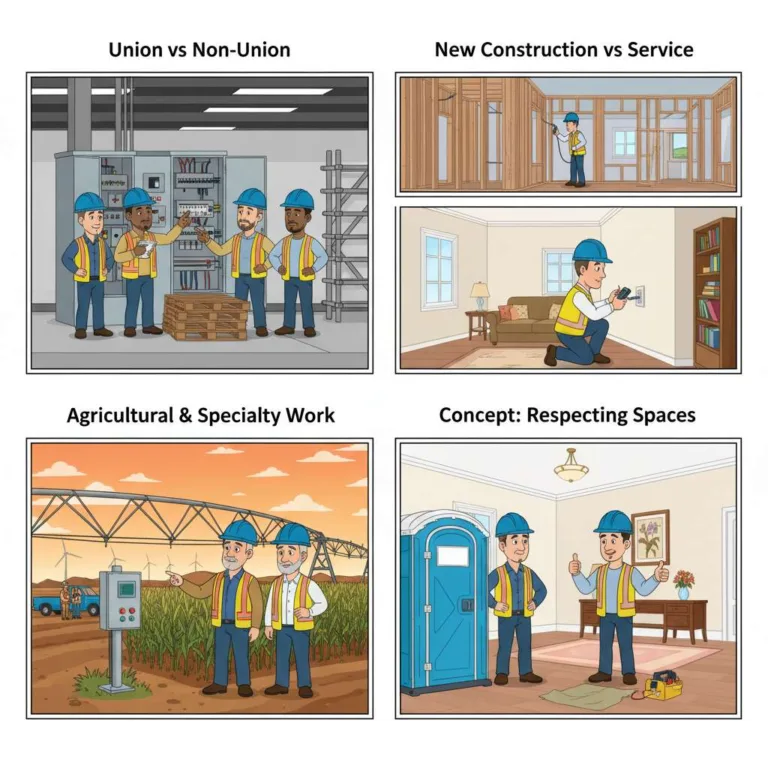
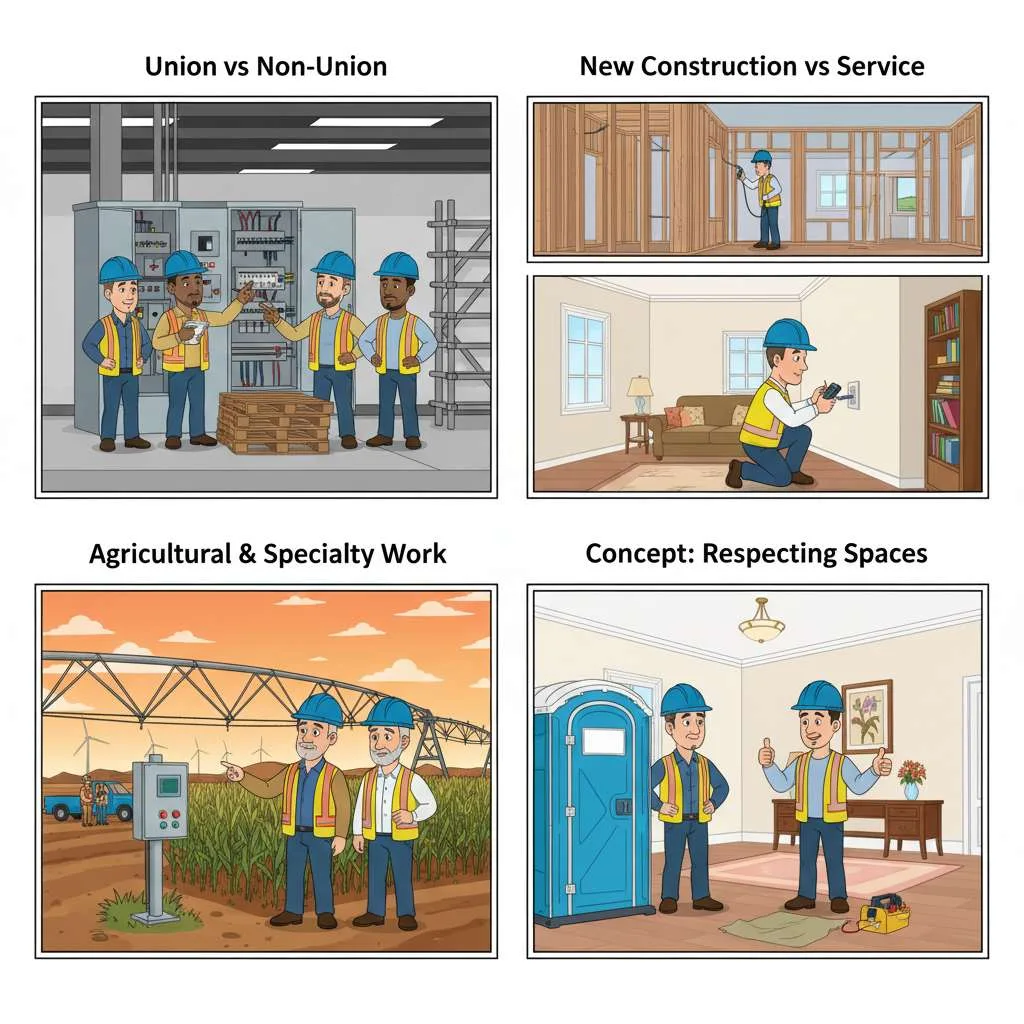
“In new construction, you share a portable toilet with the crew. In service work, you ask permission to use a client’s restroom. That one difference explains the entire shift in mindset. You go from being a builder to being a trusted guest and problem-solver.”
Beyond the two main paths lies specialty work. In a region like West Central Minnesota, with a strong DIY culture for simple tasks, becoming a specialist in complex systems is the key to building a high-value, sustainable career. While some homeowners might replace an outlet, they won’t be engineering a power system for their farm.
The most critical specialty in our area is undoubtedly **Agricultural Electrical Work**. This is where true expertise shines.
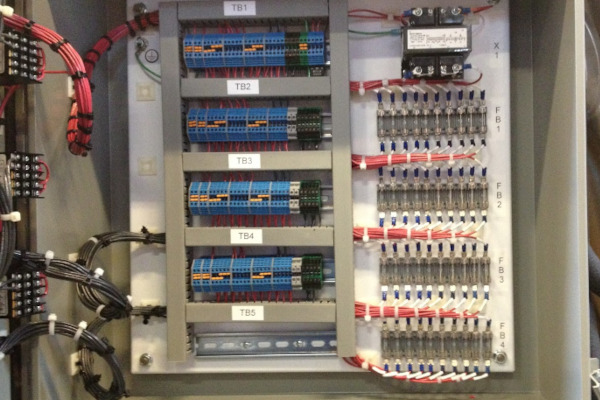
Modern farm wiring is a highly specialized, industrial-level skill.
For an electrician used to residential work, a farm is a different world. It’s not just about wiring a structure; it’s about engineering a system to survive a constant assault while protecting uniquely sensitive assets – livestock.
The Environment is an Active Adversary
In a barn, the air itself is corrosive due to ammonia and moisture. Dust from feed and grain is combustible. Rodents are a constant threat to wiring. Every component must be chosen to withstand this relentless attack.
The Invisible Threat to Livestock
Stray voltage – tiny electrical potentials you can’t feel – can be stressful or harmful to animals, affecting their health and productivity. Protecting against it requires advanced techniques like equipotential planes, a concept almost entirely absent from residential wiring.
Industrial-Scale Power Demands
A modern farm is a small industrial campus. The power needed for grain dryers, augers, and large fans dwarfs residential loads. This requires a deep understanding of multi-building distribution, heavy motor loads, and often, three-phase power systems.
While I started in non-union new construction, I would advise anyone today to strongly consider the **Union**. It provides a structured path with protections for training, pay, benefits, and workplace conduct that aren’t always guaranteed elsewhere. Regardless of the path you choose, a foundation in new construction is invaluable for learning the fundamentals at a fast pace.
Now that we’ve mapped out the different fields, the next question is a personal one: is this trade right for you? In Part 3, we’ll cover the physical and psychological requirements of a long and successful career as an electrician.


One thought on "Types of Electricians in MN: A Guide for Apprentices (Part 2)"
Comments are closed.