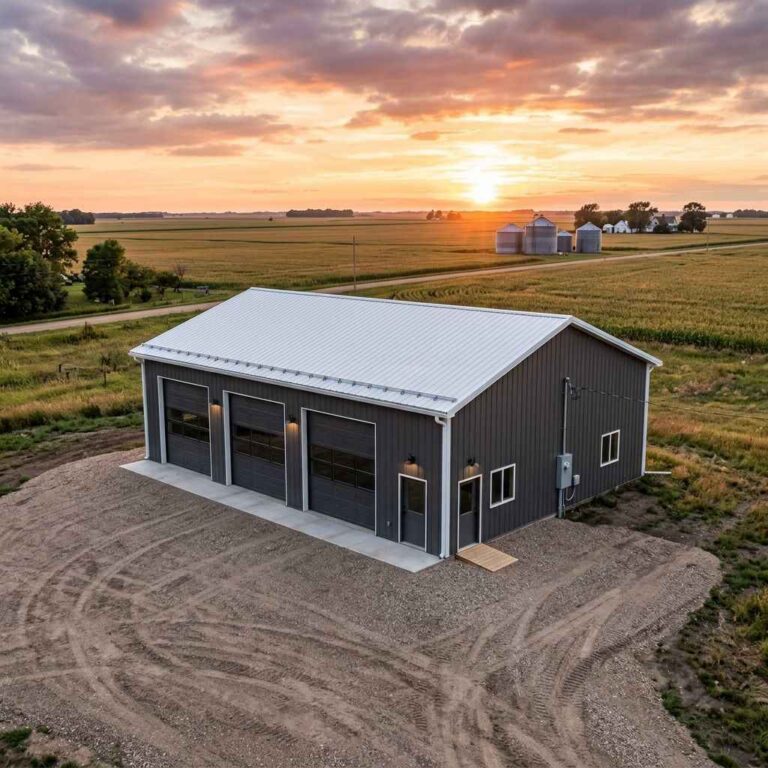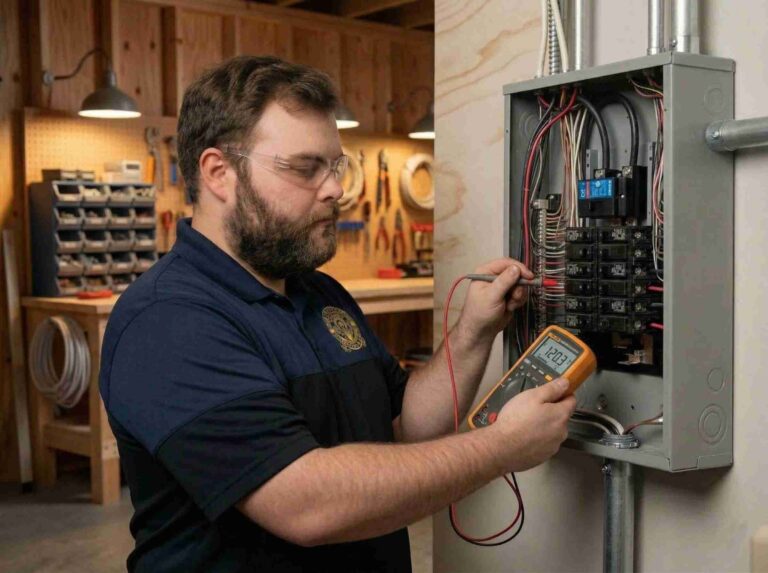
A pole barn or shop is only as useful as the power in it. Too few outlets, dim lights and a feeder that trips every time the welder and the heater run together make it a building you put up with instead of one you use.
We wire pole barns, machine sheds, shops and detached garages from Milan out to Willmar, Marshall, Morris and Redwood Falls. That covers the trench and feeder from the house or yard pole, the sub-panel, LED lighting, outlets, and 240 volt circuits for welders, compressors, heaters and lifts. We pull the state permit and handle the inspection.
- Underground feeders from the house, yard pole or a separate service
- Sub-panels sized for the tools and heat you plan to add later
- LED high-bay and shop lighting, exterior and yard lights
- 240V circuits for welders, compressors, heaters and car lifts
- GFCI protection where code requires it, plus a state permit and inspection
Plan it before the walls close
The best time to call an electrician is while the builder is still framing. It's easier and cheaper to run wire before liner panels and insulation go up, and you can put outlets and lights exactly where you'll work. Tell us how you'll use the building - storage, a shop, livestock, a heated hangout - and we'll plan the panel, circuits and lighting around that.
Sizing the feeder
The feeder is the cable that brings power out to the building, and it's the one thing that's expensive to change later. We size it for what you'll run, not just what you own today. A building with a few lights and outlets needs far less than one with a welder, a compressor and electric heat. Burial depth and conduit depend on the wiring method, and we lay it out to meet code the first time.
Free guides from our pole barn work
We've written two detailed guides based on the buildings we wire: how to wire a pole barn and pole barn wiring diagrams. They're a good place to start if you're planning a building, and when you're ready, we can do the job for you.