
 Chadwick Ferguson
Apr 22, 2026
Chadwick Ferguson
Apr 22, 2026
Is Your Electrical Panel Dangerous?
7 warning signs Minnesota homeowners miss – including recalled brands still installed in thousands of homes across West Central MN. If your panel is over 25 years old, read this before it makes the decision for you.
Your electrical panel is the most critical safety device in your home. Every circuit, every outlet, every appliance runs through it. When it works correctly, you never think about it. When it fails, the consequences range from nuisance breaker trips to a house fire that starts inside your walls while you sleep.
The problem is that dangerous electrical panels don’t announce themselves. They don’t beep. They don’t flash a warning light. They degrade silently – corroding connections, weakening breaker mechanisms, building heat at failing contact points – until the day they can’t interrupt a fault and the wiring behind your drywall ignites. By the time you smell smoke, the fire has a head start.
Thousands of Minnesota homes – including homes across our West Central Minnesota service area – still have panels that were recalled, panels with known failure rates, and panels so old that replacement parts no longer exist. Many homeowners have no idea. This guide will help you identify the 7 warning signs of a dangerous electrical panel, recognize recalled brands by name, and understand what a professional inspection actually checks. If any of this applies to your home, don’t wait.
The 7 Warning Signs of a Dangerous Electrical Panel
Most homeowners walk past their electrical panel every day without looking at it. That’s exactly how these problems go undetected for years. Here are the seven signs that your panel may be a fire hazard – any single one of these warrants a professional electrical panel inspection:
1. Burning Smell or Scorch Marks
A burning smell near your electrical panel is never normal. It means something is overheating – a loose connection, a failing breaker, or insulation breaking down under excessive heat. Scorch marks, discoloration, or melted plastic on or around the panel confirm that arcing or thermal damage has already occurred. This isn’t a “watch it and see” situation. Turn off the main breaker if safe to do so and call a licensed electrician immediately.
Immediate Fire Risk2. Breakers That Trip Repeatedly
A breaker that trips once is doing its job. A breaker that trips repeatedly on the same circuit is telling you something is wrong – either the circuit is overloaded, there’s a short circuit or ground fault downstream, or the breaker itself is failing. Worn breakers lose their ability to trip at the correct current threshold. They may trip too easily, or worse, they may stop tripping at all – which means they won’t protect you from a fault that could start a fire.
Breaker Failure Risk3. Buzzing, Crackling, or Humming Sounds
Electrical panels should be silent. If you hear buzzing, crackling, sizzling, or humming coming from your panel, an active electrical fault is occurring inside the enclosure. Buzzing typically indicates a loose connection or a breaker that’s arcing internally. Crackling or sizzling means arcing is occurring at a connection point – this generates extreme heat at the arc site and can ignite surrounding materials. Don’t ignore electrical sounds from your panel.
Active Arcing Hazard4. Rust, Moisture, or Corrosion Inside
Open your panel door and look inside. Rust on bus bars, corrosion on breaker terminals, green patina on copper conductors, or any evidence of moisture means water has entered the enclosure. Water and electricity inside a panel create corrosion that degrades connections over time, increasing resistance and generating heat. In severe cases, moisture on energized bus bars causes tracking – a carbonized path that conducts current along the surface and can ignite.
Corrosion Degrades Protection5. Warm or Hot Breakers and Wiring
Touch the front of your breaker handles (with dry hands, panel door open). Breakers should be cool or barely warm. A breaker that feels noticeably warm or hot is either overloaded or has a failing internal connection. Hot wiring at the panel – especially at the bus bar connections – indicates a loose lug, undersized conductor, or high-resistance joint. These hot spots are where fires begin. An infrared inspection can detect hot spots invisible to the naked eye.
Thermal Failure Point6. Flickering or Dimming Lights
Lights that flicker or dim when appliances turn on may indicate a panel problem – not just a wiring issue. If the flickering is widespread (multiple rooms, multiple circuits), the issue is likely at the panel: a loose main lug connection, a deteriorating bus bar, or a failing main breaker. Loose connections at the panel create intermittent contact, causing voltage fluctuations throughout the house. This is also a leading symptom of aluminum wiring connections that have oxidized.
Loose Connection Indicator7. Panel Is 25+ Years Old or a Recalled Brand
Age alone is a risk factor. Breaker mechanisms wear out. Internal connections loosen from decades of thermal cycling. Insulation materials degrade. A panel installed in the 1980s or earlier has exceeded its expected service life. If your panel carries a brand name from the recalled list below – Federal Pacific, Zinsco, Pushmatic – the risk isn’t theoretical. These panels have documented failure rates that have caused fires. If your home still has screw-shell fuses instead of circuit breakers, the panel predates modern safety standards entirely.
Replace – Do Not Repair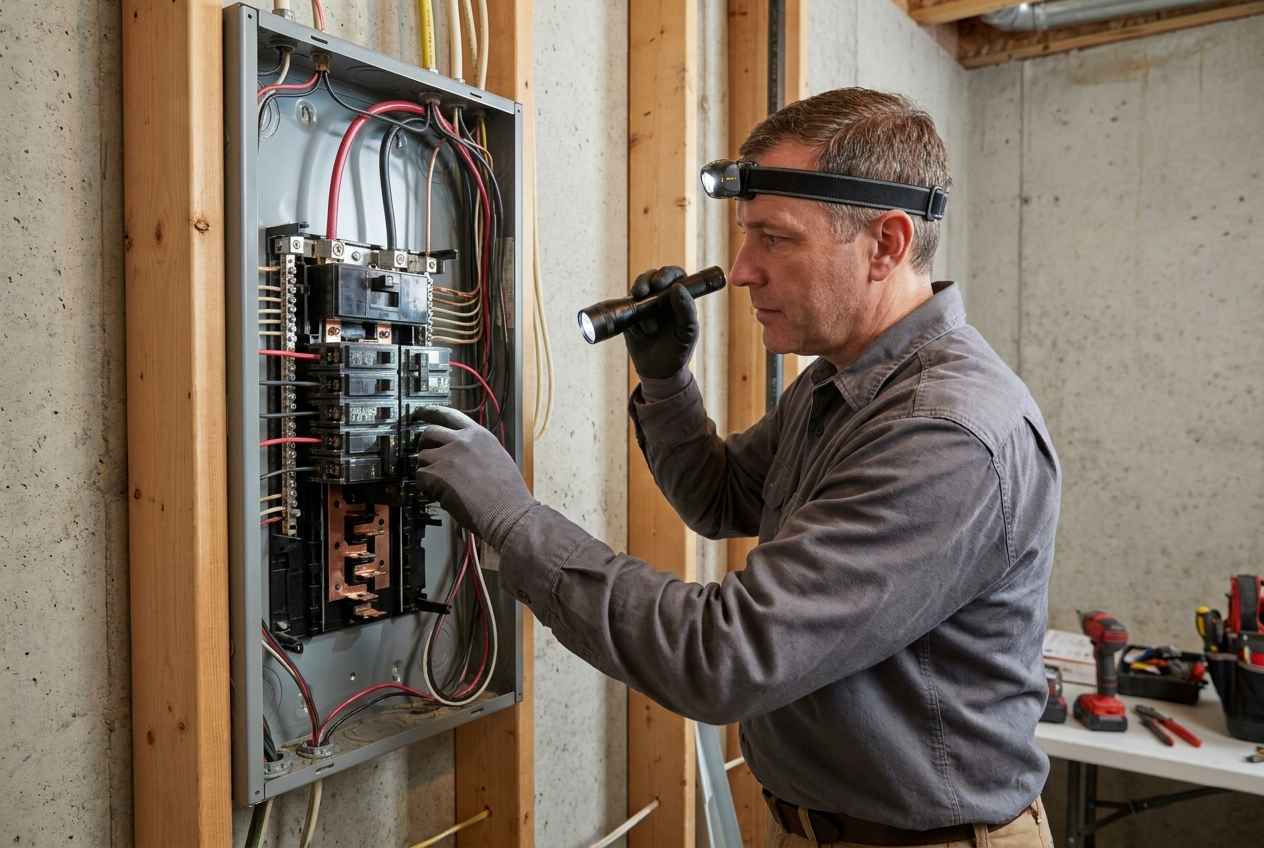
Recalled & Dangerous Panel Brands Still in Minnesota Homes
Not all electrical panels are created equal. Several panel brands manufactured from the 1950s through the 1990s have documented histories of breaker failure, fire, and recall. These panels are no longer manufactured – but they’re still installed in thousands of homes across Minnesota, including many in our West Central MN service area. If your panel carries any of these brand names, replacement is the only safe option.
Federal Pacific Electric (FPE) Stab-Lok
Federal Pacific Stab-Lok panels are the most widely documented dangerous panel in U.S. residential history. Independent testing has shown that FPE Stab-Lok breakers fail to trip in up to 25 – 30% of overload conditions. The breakers don’t reliably interrupt fault current – they allow the circuit to remain energized during a short circuit or overload, which causes the wiring to overheat and ignite. FPE panels were installed in millions of homes from the 1950s through the 1980s and are extremely common in West Central Minnesota. There’s no repair. The panel must be replaced.
Most Common – Replace ImmediatelyZinsco / GTE-Sylvania
Zinsco panels (later sold under the GTE-Sylvania and Sylvania brand names) suffer from a design flaw where the breakers fuse to the bus bar. When a breaker welds itself to the bus, it can’t trip – it’s physically locked in the ON position. The breaker handle may appear to be OFF while the circuit remains energized. These panels also have aluminum bus bars that corrode and create high-resistance connections. Zinsco panels were installed from the 1970s through the early 1990s. No retrofit or repair can fix the underlying design defect.
Breakers Fuse to Bus BarPushmatic (ITE / Bulldog)
Pushmatic panels use push-button breakers instead of toggle switches. These breakers are no longer manufactured, and replacement breakers are either unavailable or unreliable aftermarket units. The push-button mechanism wears out over time, and the breakers lose the ability to trip reliably. Because parts are unavailable, an electrician can’t properly maintain or repair these panels. If a breaker fails, the only option is full panel replacement. Adding circuits is impossible – no modern breakers fit the bus.
Parts UnavailableChallenger (CPSC Recalled)
The U.S. Consumer Product Safety Commission (CPSC) recalled certain Challenger panel models due to breakers that fail to trip during overcurrent conditions. Challenger panels were widely installed in new construction from the 1980s through the late 1990s. The affected breakers – particularly the HAGB and GFI models – can allow sustained overcurrent that overheats wiring. If your home was built in the 1980s or 1990s, check the panel door label for the Challenger brand name. Some recalled units were also sold under the Westinghouse and Cutler-Hammer brands.
CPSC RecallScrew-Shell Fuse Panels
If your home still has a fuse box instead of a circuit breaker panel – with screw-in glass or ceramic fuses – the entire system predates modern electrical safety standards. Fuse panels have no AFCI or GFCI protection capability. They can’t accommodate the electrical loads of modern homes (air conditioning, EV chargers, electric appliances). Homeowners frequently install oversized fuses to stop blowing them – which defeats the overcurrent protection entirely and allows wiring to overheat. Screw-shell fuse panels are very common in older homes across rural Minnesota and are a frequent cause of insurance policy cancellations.
Predates Modern Safety StandardsHow to Check Your Panel Brand
- Open the panel door – the brand name is typically printed on the inside of the door, on a label on the panel cover, or stamped into the metal enclosure
- Look at the breakers – the brand name is molded into the breaker handle or printed on the breaker face. FPE Stab-Lok breakers have the Stab-Lok name on every unit
- If the panel has glass or ceramic fuses that screw in – you’ve a fuse panel that needs to be upgraded to a modern breaker panel
- If you can’t identify the brand – take a clear photo of the panel with the door open and send it to us. We’ll identify it for you at no charge
- Don’t remove the panel cover (dead front) – the panel cover is the inner metal plate that covers the bus bars and wiring. Only a licensed electrician should remove it. Lethal voltages are exposed behind the cover
“I have pulled Federal Pacific panels out of homes where the breakers were visibly melted to the bus bar. The homeowner had been living with that for years – never knew. Every FPE Stab-Lok panel I open, I find breakers that won’t trip under test. Not some of them. Every single one. That’s why we tell homeowners: there’s no repair for these panels. Replacement is the only answer.” – Chadwick Ferguson, Master Electrician & Co-Owner, Bright Haven Electric LLC
What a Professional Panel Inspection Checks
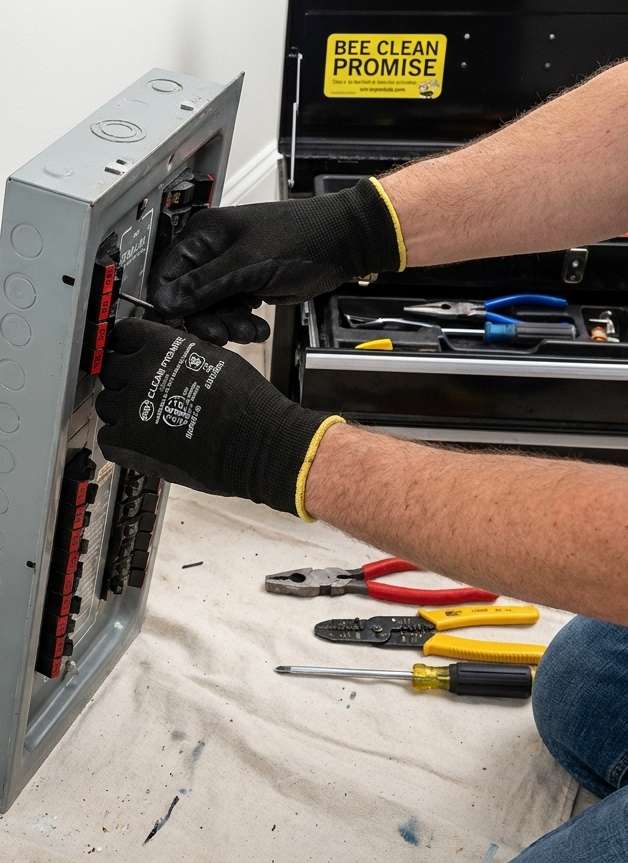
A panel inspection isn’t just opening the door and looking inside. A properly trained electrician evaluates the entire service entrance and distribution system. Here is what our electrical safety audit covers when we inspect a panel:
Time needed: 1 hour and 30 minutes
A professional electrical panel inspection evaluates the entire service entrance and distribution system for safety hazards, code violations, and equipment failures. This is the process Bright Haven Electric follows on every residential panel inspection in West Central Minnesota. This inspection must be performed by a licensed electrician. Homeowners shouldn’t remove the panel dead front or test breakers on recalled panels.
- Identify the panel manufacturer, model, and age
Verify the brand name on the panel door, enclosure, and breaker handles against known recall and failure databases. If the panel is a recalled brand (Federal Pacific, Zinsco, Challenger), recommend full replacement regardless of the panel’s current visual condition. Document the panel model number, amperage rating, and estimated installation date.
- Inspect the service entrance and meter base
Check the weatherhead, service mast, meter socket, and main disconnect for physical damage, corrosion, and code compliance. Verify that the service entrance cable is properly secured, the drip loops are intact, and the meter enclosure seal isn’t compromised. A damaged service entrance affects the entire system downstream.
- Remove the dead front and inspect bus bars, lugs, and connections
With the dead front removed, inspect every conductor termination for discoloration, heat damage, corrosion, melted insulation, and loose connections. Check the main lugs and bus bar for signs of arcing or overheating. This is where most hidden hazards are found – problems invisible from outside the panel.
- Test every breaker for proper operation
Toggle each breaker OFF and back ON. Check for breakers that are difficult to reset, feel loose in the bus, or show signs of internal damage such as discoloration or a burnt smell. Breakers that don’t seat firmly into the bus are a fire hazard. On non-recalled panels, perform trip testing on sample breakers to verify the trip mechanism functions correctly.
- Verify circuit labeling and load distribution
Mislabeled or unlabeled panels are a safety issue – no one can safely isolate a circuit in an emergency if the labels are wrong. Verify and correct the panel schedule. Check load balance across phases and identify any circuits that are overloaded or sharing neutrals improperly.
- Check grounding and bonding
Verify that the grounding electrode conductor is properly connected to the grounding electrode system, that the main bonding jumper is installed correctly, and that the neutral and ground bus bars are configured properly for the panel type (main panel vs. sub-panel). Improper grounding is one of the most dangerous and most common deficiencies.
- Evaluate AFCI and GFCI protection
Current NEC code requires AFCI and GFCI protection on most residential circuits – bedrooms, kitchens, bathrooms, laundry, garages, basements, and outdoors. Document which circuits lack required protection and recommend upgrades. Test all existing AFCI and GFCI breakers for proper trip function.
- Assess panel capacity for current and future loads
If you’re planning an EV charger, hot tub, shop, or other high-draw addition, evaluate whether the panel has sufficient amperage and available breaker spaces – or whether a 200-amp service upgrade is needed. Document available capacity and provide recommendations for future electrical planning.
Insurance, Home Sales, and Panel Replacement
Your electrical panel isn’t just a safety issue – it’s a financial one. Insurance companies, home inspectors, and real estate transactions all converge on the electrical panel. Here is what homeowners across Minnesota need to understand:
Insurance Cancellation
Insurance companies are denying coverage and cancelling policies on homes with Federal Pacific, Zinsco, and fuse panels at increasing rates. If you receive an insurance cancellation notice citing your electrical panel, you typically have 30 – 60 days to replace the panel and provide documentation. We provide the inspection, replacement, and compliance letter your insurer requires – on a timeline that protects your coverage.
30 – 60 Day DeadlineHome Sales and Inspections
A dangerous or recalled electrical panel will appear on every competent home inspection report. It can delay or kill a sale. Buyers’ lenders may refuse to finance a home with a recalled panel. Sellers who replace the panel before listing eliminate a major negotiation point and demonstrate that the home has been properly maintained. We work with homeowners, realtors, and home inspectors to resolve panel issues before they become deal-breakers.
Pre-Listing AdvantagePanel Upgrade Benefits
A modern 200-amp panel does more than eliminate fire risk. It provides room for EV chargers, heat pumps, electric ranges, and other modern loads. It includes AFCI breakers that detect arc faults – a leading cause of electrical fires. It gives you a properly labeled, properly grounded electrical system that meets current NEC code. And it gives you confidence in your electrical system that the most critical safety device in your home actually works.
Modern ProtectionWhat Does a Panel Replacement Cost?
Panel replacement costs vary based on the existing installation, panel size, and any additional work required (service entrance repair, grounding system upgrades, circuit rewiring). In our service area, a typical residential panel replacement ranges from $2,500 to $5,500 for a standard 200-amp upgrade. This includes the new panel, breakers, labor, permit, and inspection.
Some electric cooperatives offer rebates for panel and service upgrades. We help homeowners identify available rebates and incentives. We also provide transparent, itemized quotes before any work begins – no surprises, no hidden fees.
If your panel is a recalled brand or has any of the warning signs listed above, the cost of replacement is a fraction of the cost of an electrical fire. Insurance deductibles, temporary housing, personal property loss, and rebuilding costs dwarf the price of a panel. The math is simple.
Panel Inspections Across West Central Minnesota
Bright Haven Electric LLC is a Class A electrical contractor serving residential, commercial, and industrial customers across West Central Minnesota. We’ve inspected and replaced panels in homes dating from the 1920s to the 2020s – from farmsteads with original fuse panels to lake homes with Federal Pacific Stab-Lok installations.
We serve homeowners throughout our 10-county service area including:
Not sure what panel you’ve? Send us a photo. We’ll identify the manufacturer, check it against recall databases, and let you know whether an inspection is warranted. No charge for the identification – we would rather catch a dangerous panel before it catches fire.
Electrical Panel Safety FAQ
Below are the most common questions we receive about electrical panel safety, recalled brands, and panel replacement in Minnesota.
Look for the 7 warning signs: burning smell or scorch marks, breakers that trip repeatedly, buzzing or crackling sounds, rust or moisture inside the panel, warm or hot breakers, flickering lights, and a panel that’s over 25 years old or a recalled brand. Open your panel door and check the brand name on the inside of the door or on the breaker handles. If you see Federal Pacific, Stab-Lok, Zinsco, GTE-Sylvania, Pushmatic, or Challenger – or if your panel uses screw-in fuses instead of circuit breakers – contact a licensed electrician for an inspection. Any single warning sign warrants professional evaluation.
Yes. Independent testing has shown that Federal Pacific Stab-Lok breakers fail to trip during overcurrent events in up to 25 – 30% of tests. When a breaker doesn’t trip, the circuit remains energized during a short circuit or overload, allowing wiring to overheat and potentially ignite. FPE panels were never formally recalled by the CPSC, but every major electrical safety organization and home inspection association recommends replacement. FPE panels are extremely common in homes built from the 1950s through the 1980s across Minnesota. There’s no retrofit or repair – full panel replacement is the only solution.
Insurance companies are increasingly denying coverage and cancelling policies on homes with Federal Pacific, Zinsco, and fuse panels. If your insurer identifies a recalled or outdated panel during an inspection or policy review, you may receive a cancellation notice with a 30 – 60 day deadline to remedy the issue. Bright Haven Electric provides the panel replacement and written compliance documentation your insurer requires. We work within insurance deadlines to protect your coverage.
A typical residential panel replacement in West Central Minnesota ranges from $2,500 to $5,500 for a standard 200-amp upgrade. The cost depends on the existing installation condition, panel size, whether the service entrance needs repair, and whether additional work like grounding system upgrades or AFCI breaker installation is required. This includes the new panel, all breakers, labor, electrical permit, and inspection. Some electric cooperative rebates may offset part of the cost. We provide transparent, itemized quotes before any work begins.
No. For Federal Pacific, Zinsco, and Pushmatic panels, the failure is a design defect in the panel and breaker system – not a problem with individual breakers. Replacement breakers for these panels are either unavailable, aftermarket units of questionable quality, or from the same defective product line. Installing new breakers in a panel with a defective bus bar doesn’t fix the bus bar. The only safe remediation is full panel replacement with a modern, UL-listed panel and breakers from a current manufacturer.
Fuse panels aren’t inherently dangerous when properly maintained and correctly fused – but they’re obsolete. They can’t accommodate AFCI or GFCI protection, they’re limited in capacity for modern electrical loads, and replacement fuses are increasingly difficult to find. The most common danger is homeowners installing oversized fuses to prevent nuisance blowing – a 30-amp fuse on a 15-amp circuit defeats all overcurrent protection and allows wiring to overheat. Fuse panels are also a common reason for insurance policy cancellations in Minnesota. We recommend upgrading fuse panels to modern breaker panels for safety, capacity, and insurability.
Don’t ignore it. A burning smell from your electrical panel means something is overheating – a failing breaker, a loose connection, or degrading insulation. If you can safely reach the main breaker, turn it off. Don’t touch any breaker that appears damaged, discolored, or melted. Call a licensed electrician immediately. Don’t reset the main breaker until a professional has inspected the panel. If you see smoke or flames, leave the home and call 911. Electrical panel fires can spread into wall cavities very quickly.
Possibly. A Level 2 EV charger typically requires a 40 – 60 amp dedicated circuit. A hot tub requires a 40 – 50 amp circuit. If your existing panel is at or near capacity, doesn’t have available breaker spaces, or is an older 100-amp service, you’ll likely need a 200-amp service upgrade before adding these loads. We assess panel capacity as part of every EV charger and hot tub installation quote. Planning the panel upgrade alongside the new load is the most cost-effective approach.
Related Safety Guides
- Home Electrical Safety Inspection – Our full 72-point inspection covers your panel, wiring, grounding, and every outlet in the house
- Electrical Shock Prevention Guide – Dangerous panels increase shock risk. Learn how to protect your family from electrocution hazards
Bright Haven Electric – Safety-First Electrical Work
Licensed, insured, and safety-trained electrical services across West Central Minnesota.
Is Your Panel Safe? Find Out Now.
Don’t wait for a fire to tell you your panel was dangerous. A professional inspection takes under 90 minutes and gives you a definitive answer – along with a written report and clear next steps.
Chadwick Ferguson
Chadwick Ferguson is the owner and licensed Master Electrician behind Bright Haven Electric LLC, serving West Central Minnesota from his base in Milan, MN. With deep expertise in residential, commercial, and agricultural electrical systems, he specializes in modern energy solutions including Level 2 EV charger installations, automatic standby generators, and comprehensive electrical panel upgrades.
Chadwick is committed to providing safe, code-compliant, and reliable electrical work to his rural Minnesota community. As the author of the BHElectric blog, he shares practical insights and expert guidance to help homeowners and businesses navigate the complexities of their electrical systems.