
 Chadwick Ferguson
Mar 20, 2026
Chadwick Ferguson
Mar 20, 2026
Safety Before & After Storms
Severe storms are more common in the spring and summer, but they can strike any time of year. Knowing what to do – and what not to touch – before and after a storm can save your life, your appliances, and your home.
Storm electrical safety is one of the most overlooked – and most critical – topics for homeowners. Every year, severe thunderstorms, tornadoes, and straight-line winds knock out power to thousands of homes across West Central Minnesota. As a result, the moments after a storm passes are some of the most electrically dangerous moments a homeowner will ever face – yet most people aren’t aware of the hazards hidden under fallen trees and standing water.
This guide covers every critical storm electrical safety step – from assembling a storm kit and protecting your circuits before the storm arrives, to navigating downed power lines, flooded basements, and generator use after the storm passes. In addition, if you also need winter-specific preparation advice, see our companion guide: Prepare for Winter Storms: 7 Tips for West Central MN.
Storm Electrical Safety: Before the Storm
The time to prepare is before the radar turns red. In particular, these five steps take less than an hour and can mean the difference between a minor inconvenience and a serious emergency.
Assemble a Storm Safety Kit
Keep a pre-packed kit with water, battery-operated flashlights, a portable radio, first-aid supplies, and a portable phone charger. Plus, include a written list of emergency phone numbers – especially your electric utility’s outage line. Be prepared for a prolonged outage lasting hours or even days if power lines and distribution equipment sustain heavy damage.
Know Watch vs. Warning
Pay close attention to local weather reports. A tornado or severe storm watch means atmospheric conditions are favorable for dangerous weather to form – stay alert. A warning means dangerous conditions have been observed or are imminent – take shelter immediately. These distinctions can save your life.
Seek Shelter at the First Thunder
Lightning can travel up to ten miles away from the storm that produced it. If you can hear thunder, you’re already within striking distance. Move indoors immediately. Avoid touching plumbing, wired phones, or anything connected to the electrical system during active lightning.
Install GFCI Protection
Ground fault circuit interrupters (GFCIs) detect dangerous ground faults and cut power in milliseconds – before a person can be shocked. Because storms create conditions where water and electricity meet, GFCIs should be installed in bathrooms, kitchens, laundry rooms, basements, outdoor outlets, and anywhere else moisture is likely to be present.
Protect Your Circuits When Power Goes Out
If you lose power during a storm, switch off lights, large electronics, and major appliances to prevent overloading your circuits when power is restored. Otherwise, a sudden surge of demand across multiple devices can trip breakers or damage sensitive electronics. However, leave one lamp or switch on as a signal for when utility power returns.
Storm Electrical Safety: After the Storm
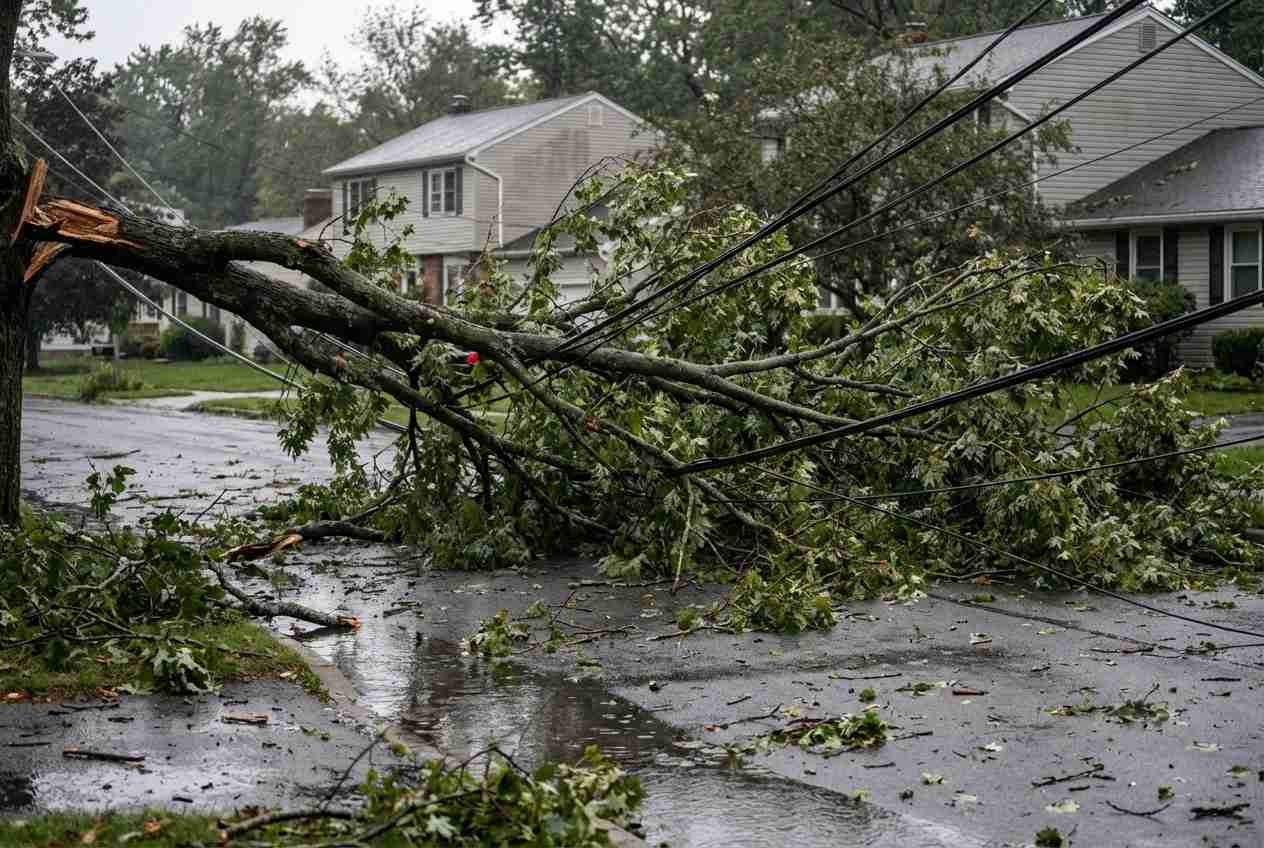
The minutes and hours after a storm passes are the most electrically dangerous. Consequently, downed wires, flooded basements, and damaged equipment create invisible hazards that kill people every year. Most importantly, follow these critical storm electrical safety steps before venturing outside or re-entering damaged areas.
Immediate Outdoor Hazards
Stay Away From Downed Power Lines
Above all, when venturing outside after a storm, stay far away from downed power lines and be alert that tree limbs or debris may hide an energized conductor. Assume every dangling wire is live and deadly. In addition, warn others to stay back and contact your electric utility immediately. Never attempt to move a downed line yourself – even with a non-conductive object.
Drive with Extreme Caution
If you encounter a downed power line while driving, stay in your vehicle, warn others to stay away, and call 911 or your electric utility. Don’t exit the vehicle unless it’s on fire – and in that case, jump clear without touching the vehicle and the ground simultaneously. Additionally, treat every intersection where traffic lights are out as a four-way stop before proceeding.
Re-Entry, Recovery & Backup Power
Check Services Before Re-Entry
Before re-entering storm-damaged buildings or rooms, first ensure all electric and gas services are turned off. Never attempt to turn off power at the breaker box if you must stand in water to reach it. Instead, if you can’t safely access your breaker panel, call your electric utility to shut off power at the meter before entering.
Never Enter Flooded Electrical Areas
Never step into a flooded basement or any area where water is covering electrical outlets, appliances, or cords. Because water is an excellent conductor, any energized equipment in contact with floodwater creates a lethal hazard across the entire water surface. For this reason, never touch electrical appliances, cords, or wires while you’re wet or standing in water.
Have Water-Damaged Equipment Inspected
Don’t use any electrical item that has been submerged or exposed to significant moisture until a qualified electrician has inspected it and confirmed it’s safe to operate. In particular, water damages insulation, corrodes internal wiring, and compromises ground paths. As a result, what looks dry on the outside may be dangerously compromised inside.
Use Generators Safely
When using a portable generator, follow all manufacturer recommendations. Keep it dry, run it outdoors only, and never plug it into a wall outlet or directly into your home’s wiring. Otherwise, doing so can backfeed electricity into utility lines and electrocute lineworkers restoring your power. In contrast, a permanent standby generator should be professionally installed with a transfer switch to prevent backfeeding.
Storm Safety Kit Checklist
Keep this kit in a cool, dry place and make sure every member of your family knows where it’s. Check expiration dates on food and medications at least twice per year.
Why GFCIs Are Critical for Storm Electrical Safety
Ground fault circuit interrupters (GFCIs) monitor the current flowing through a circuit and trip in as little as 1/40th of a second if they detect electricity leaking to ground – such as through a person’s body or through water. During and after storms, the risk of ground faults increases dramatically due to flooding, moisture, and damaged wiring.
Where GFCIs should be installed:
- Bathrooms and laundry rooms
- Kitchens (all countertop outlets)
- Basements and crawl spaces
- All outdoor receptacles
- Garages and workshops
- Anywhere water and electricity may meet
If your home lacks GFCI protection in these areas, consider having them installed before the next storm season. Portable GFCI adapters are also available as a temporary solution for unprotected outlets.
Generator Safety: Portable vs. Standby
Portable generators are a common backup power solution, but they must be used correctly to avoid lethal hazards:
- Never run a generator indoors – carbon monoxide poisoning kills within minutes in enclosed spaces.
- Never plug a generator into a wall outlet or wire it directly into your home’s electrical system. This causes backfeeding – sending electricity out through the utility meter and into the grid, where it can electrocute lineworkers trying to restore your power.
- Keep the generator dry – operate it under a canopy or tarp, not in rain or standing water.
- Use heavy-duty extension cords rated for the generator’s output to connect individual appliances.
A permanent standby generator should be professionally installed and must include an automatic transfer switch that isolates your home from the utility grid when the generator activates. This prevents electricity from leaving your generator and entering power lines where it can kill line workers. Bright Haven Electric installs and services standby generators throughout West Central Minnesota.
Report Downed Power Lines & Outages
Click on your local utility provider below to view their emergency dispatch number.
Xcel Energy
Emergency Dispatch: 1-800-895-1999
Primary Service Areas: Clara City, Clarkfield, Ghent, Granite Falls, Maynard, Raymond, Watson.
Otter Tail Power Company
Emergency Dispatch: 1-800-257-4044
Primary Service Areas: Alberta, Appleton, Bellingham, Boyd, Canby, Chokio, Clarkfield, Clinton, Correll, Cottonwood, Dawson, Hanley Falls, Minneota, Montevideo, Odessa, Pennock, Porter, Taunton.
Agralite Electric Cooperative
Emergency Dispatch: 1-888-884-3887
Primary Service Areas: Alberta, Appleton, Benson, Chokio, Clinton, Clontarf, Correll, Danvers, Hancock, Holloway, Morris, Murdock.
Runestone Electric Association
Emergency Dispatch: 1-800-473-1722
Primary Service Areas: Alexandria, Hancock, Morris.
Minnesota Valley Cooperative / MVEC
Emergency Dispatch (Montevideo & Generic): 320-269-2163
Emergency Dispatch (Milan Area MVEC): 1-800-232-2328
Primary Service Areas: Bellingham, Clarkfield, Granite Falls, Hanley Falls, Madison, Marietta, Maynard, Milan, Montevideo, Watson.
Lyon-Lincoln Electric Cooperative
Emergency Dispatch: 1-800-927-6276
Primary Service Areas: Cottonwood, Ghent, Marshall, Minneota, Taunton.
Other Regional Cooperatives
(320) 693-3231
Municipal Public Utilities (City-Owned)
Related Safety Guides
- Prepare for Winter Storms: 7 Tips for West Central MN – Structural and electrical preparation for blizzards and ice storms.
- Downed Power Line Safety Guide – What to do if you encounter a downed line on foot or while driving.
- 10 Outdoor Electrical Safety Tips – Yard work, power tools, and outdoor outlet safety.
- 7 Home Electrical Safety Tips – Everyday safety practices for Minnesota homeowners.
- Storm Damage Repair Services – Electrical mast, weatherhead, and meter base repair after storm damage.
Storm Damage? We’re Here to Help.
If you need storm damage repair, GFCI installation, a standby generator, or a full electrical safety inspection – Bright Haven Electric LLC serves all of West Central Minnesota.
Stay at least 100 feet away – assume it’s live and deadly even if it appears inactive. Don’t attempt to move it with any object. Warn others to keep back, call 911, and then call your electric utility’s emergency dispatch number. If a downed line is touching your vehicle, stay inside and wait for utility crews unless the vehicle is on fire.
Absolutely not. Plugging a generator into a wall outlet causes backfeeding – electricity travels backward through your wiring and out through the utility meter into the grid. This can electrocute lineworkers who are restoring power in your neighborhood. Always connect individual appliances directly to the generator using heavy-duty extension cords, or have a licensed electrician install a manual transfer switch or automatic standby generator.
Storms bring water into contact with electrical systems – flooded basements, wet outlets, and moisture-damaged wiring. GFCIs detect when electricity leaks to ground (such as through water or a person’s body) and shut off the circuit in as little as 1/40th of a second. They should be installed in bathrooms, kitchens, basements, outdoor outlets, garages, and anywhere moisture and electricity may meet.
No – don’t use any electrical appliance, tool, or device that has been submerged or significantly exposed to water until a qualified electrician has inspected it and confirmed it’s safe. Water damages internal insulation, corrodes wiring, and compromises ground paths. Equipment that looks dry on the outside can be dangerously compromised inside.
Yes – switch off lights, large electronics, and major appliances at the breaker panel to prevent circuit overload when power is restored. A sudden surge of demand across multiple devices can trip breakers or damage sensitive electronics. Leave one light switch on so you know when utility power returns.
Call an electrician if you notice any of the following: a damaged or leaning electrical mast or weatherhead, a flooded basement with electrical equipment, outlets or switches that were submerged, a burning smell from your panel, or if your utility can’t restore power because your service entrance is damaged. Storm damage electrical repair requires a licensed electrician and typically a new electrical permit.
Chadwick Ferguson
Chadwick Ferguson is the owner and licensed Master Electrician behind Bright Haven Electric LLC, serving West Central Minnesota from his base in Milan, MN. With deep expertise in residential, commercial, and agricultural electrical systems, he specializes in modern energy solutions including Level 2 EV charger installations, automatic standby generators, and comprehensive electrical panel upgrades.
Chadwick is committed to providing safe, code-compliant, and reliable electrical work to his rural Minnesota community. As the author of the BHElectric blog, he shares practical insights and expert guidance to help homeowners and businesses navigate the complexities of their electrical systems.