
Knob & Tube Wiring in MN: Insurance, Code & Safety Guide | Bright Haven Electric
 Chadwick Ferguson
Feb 19, 2026
Chadwick Ferguson
Feb 19, 2026
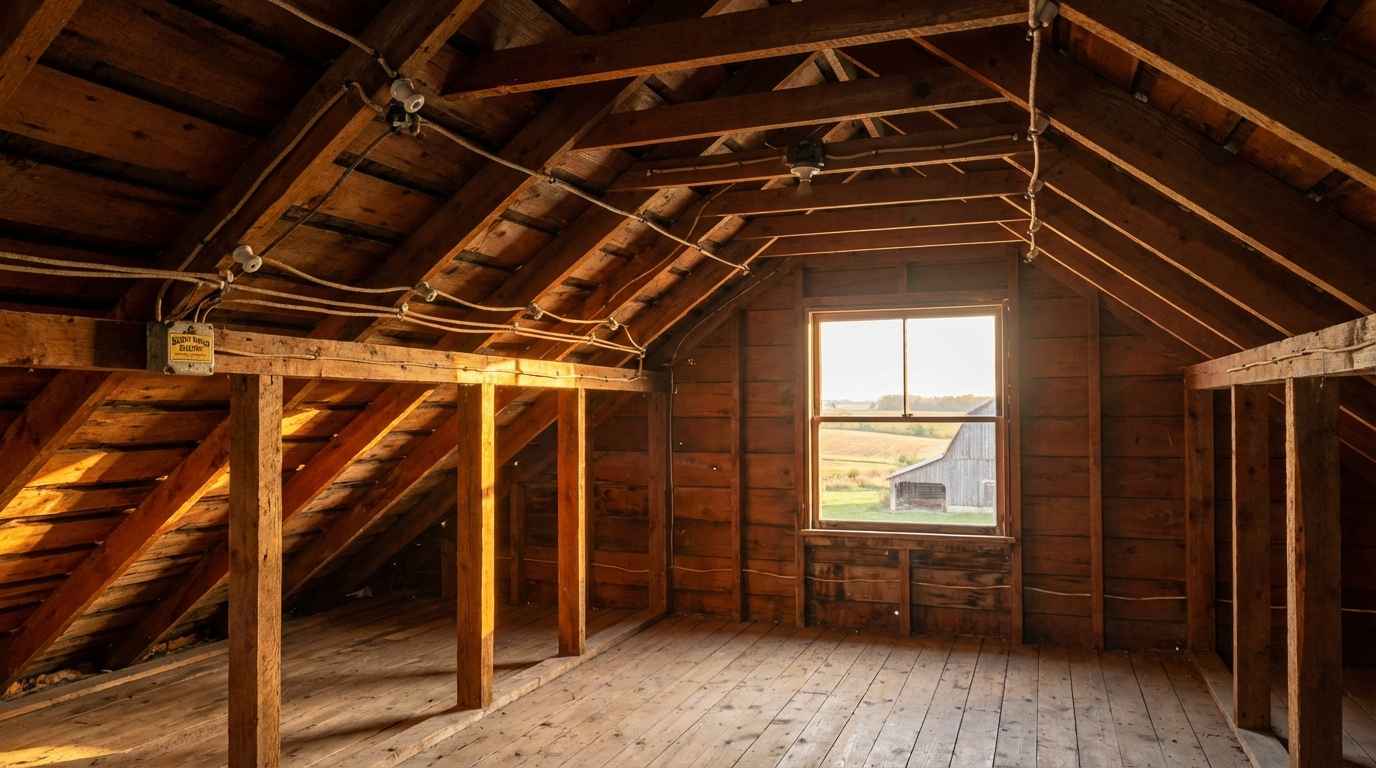
Is your home due for knob and tube replacement in Minnesota? If you’re dealing with an insurance or insulation deadline in West Central MN, discover how to correct it without destroying your home’s historic charm.
If you own a pre-1950s home in West Central Minnesota, you might be living with a hidden underwriting problem. Knob and Tube (K&T) wiring – common from the 1880s through the 1940s – is now one of the most frequent reasons we see policy non-renewals, bind-with-deadline riders, and insulation projects getting refused. Whether you’re buying a historic farmhouse or trying to renew, the message from carriers is increasingly simple: modernize it and document it.
We regularly handle K&T remediation and insurer documentation requests in Swift, Chippewa, Lac qui Parle, and Big Stone counties – especially around Appleton, Milan, Montevideo, Benson, and surrounding rural properties.
The Insurance Ultimatum
We see it weekly: a homeowner receives a letter requiring a “safety certification” or full removal of active K&T within 30 – 60 days. Carriers may “bind” coverage for a new home purchase, then attach a deadline rider that must be satisfied for coverage to continue.
Many insurers will bind coverage for a purchase but require remediation within a set timeframe. Missing the deadline can lead to cancellation or non-renewal.
Which Insurers Flag Knob & Tube in Minnesota?
Underwriting requirements change, and acceptance varies by product and risk profile – but multiple major and regional carriers commonly treat active knob-and-tube as an eligibility issue. In practice, homeowners most often call us after letters involving carriers such as State Farm, American Family, and local mutuals like Redwood County Mutual, Western Mutual, or Mid-Minnesota Mutual. When standard placement fails, the Minnesota FAIR Plan can sometimes provide temporary placement when standard carriers decline coverage – but unsafe wiring typically must be in active repair with a permit filed.
Underwriting is Documentation-Driven
Carriers don’t just want “it was fixed.” They want verifiable proof: scope, permit, inspection sign-off, and clear notes that K&T was removed or permanently de-energized.
Deadlines Are Real
Insurance riders often require action within 30 – 60 days. We plan scope early and document progress so you’re not stuck scrambling at the finish line.
Old Homes Get Extra Scrutiny
Homes built before 1920 – 1940 frequently trigger deeper underwriting review. The goal is to remove uncertainty with modern wiring and inspection proof.
Why Do Insurers Hate It?
Fire Risk
Cloth/rubber insulation becomes brittle over decades. Rodents, dust, and vibration can expose copper and increase arc risk.
No Equipment Ground
K&T typically has no grounding conductor. That affects shock safety and can create “false ground” issues with 3-prong outlets.
Insulation Trap (MN Problem)
K&T was designed to shed heat into open air. When buried under insulation, it can overheat – and that’s where code and insurers clamp down.
Code for Knob and Tube Replacement Minnesota: NEC 394
Minnesota follows the NEC 2023 statewide. Under NEC Article 394.12, knob-and-tube wiring can’t be used in wall/ceiling/attic spaces where it will be surrounded by loose, rolled, or foamed-in-place insulation.
This creates the catch-22: you want to air-seal and insulate to cut heating bills, but an insulation contractor sees active K&T and refuses the job. They’re right to refuse – burying energized K&T is a serious hazard.
Some homeowners ask if installing an AFCI breaker is enough. AFCI helps detect arcing, but it doesn’t add a ground wire and it doesn’t make it legal to bury K&T in insulation. Many insurers also won’t accept AFCI alone as a permanent resolution.
Original knob and tube is rated for only 60°C, but modern light fixtures and LEDs require wire rated for 90°C. Don’t swap fixtures yourself. Connecting modern fixtures directly to old K&T often melts the brittle insulation inside the box, creating an immediate fire hazard.
Do You Have to Remove Every Inch of Knob & Tube?
Not always. There isn’t always a blanket rule that forces physical removal of every legacy conductor in every situation. What typically forces action in Minnesota is energized K&T in prohibited or unsafe conditions – especially where insulation will cover it, where circuits were modified improperly, or where deterioration and unsafe splices exist. In plain English: active + insulated/altered/deteriorated is the problem.
Common Hidden Issue: 3-Prong Outlets With No Ground
This is one of the most common surprises in older homes: you see “modern” 3-prong outlets, but the circuit has no equipment grounding conductor. That can create a false sense of safety for homeowners and home inspectors.
Where a grounding conductor isn’t present, certain receptacle upgrades can be made safer using GFCI protection plus required labeling (e.g., “No Equipment Ground”) as part of a phased modernization plan. This isn’t a substitute for rewiring when K&T must be eliminated for insurance or insulation – but it’s a responsible way to reduce risk while you plan the full project.
Our Process for Knob and Tube Replacement Minnesota
The fear of “gutting the house” stops most people from acting. At Bright Haven Electric, we specialize in minimally invasive knob and tube replacement in Minnesota that respects plaster and preserves historic character. We differentiate with a lead-safe, white-glove process: using HEPA-filtered dust extraction to capture old plaster dust and Ram-board floor protection to safeguard your original hardwood.
The “Fishing” Process
Instead of tearing down walls, we use flexible drill bits and fish tape to pull modern wiring through existing cavities. We map routes, scope where needed, and focus on targeted access points to reduce patching.
Insurance-Ready Compliance Package™
Many contractors can “do the work.” The difference is whether the underwriter accepts it. We build the paperwork into the job so your agent has everything needed to clear the condition and keep your policy active.
- Scope of Work Letter: Clear statement of circuits addressed and K&T removed/de-energized.
- Electrical Permit: Filed with the State of MN (DLI).
- Inspection Sign-Off: Documentation from the electrical inspector.
- Photo Evidence: Helpful before/after documentation for underwriting clarity.
Financial Help for Rewiring (Yes, It Exists)
Because active K&T is a safety and habitability issue, some homeowners may qualify for assistance programs. Availability depends on household eligibility and location – but these options are worth checking before you give up.
- Minnesota Housing Rehabilitation Loans: Deferred or zero-interest options for qualifying households. In Swift County, contact the HRA in Benson (ask for Karly Meixel or Leanna Larson). In Chippewa County, contact the Prairie Five Community Action Council in Montevideo.
- MN Residential Electrical Panel Grant (Coming Soon): A new state grant offering up to $3,000 for panel upgrades is pending launch. Contact us to join the waitlist to be first in line when the $5.8M funding releases later this year.
- USDA Section 504 (Rural Repair): For eligible rural homeowners, grants (up to $10,000) and 1% loans are available to remove safety hazards.
Many preservation grants are aimed at nonprofits or public entities and aren’t typically available directly to individual homeowners. If your home is part of an eligible historic program, we can help you document electrical scope for the program administrator.
Before You Call Your Insurance Agent
If you’ve received a non-renewal notice, don’t panic. Most carriers simply want proof that the condition has been corrected. The faster we assess, scope, permit, and document the work, the easier the underwriting review becomes. Use our audit to show them you’ve a plan in motion.
FAQ: What Homeowners (and Agents) Ask Us Most
Yes. Many carriers treat active K&T as an underwriting eligibility issue or require remediation within a deadline rider. Requirements vary, but documentation is nearly always required.
Because energized K&T can’t be surrounded by insulation under NEC rules. Insulation contractors often require verification that wiring isn’t active, or they’ll require electrical remediation first.
Usually no. We use minimally invasive fishing techniques, planned routes, and targeted access points to reduce wall damage and preserve historic finishes.
Not necessarily. Older homes can have ungrounded circuits with 3-prong receptacles installed later. We can test and provide compliant safety upgrades (like GFCI protection + labeling) as part of a phased plan.
Don’t Let Old Wiring Risk Your Home
Get confidence and safety – and keep your coverage. We specialize in historic homes and electrical safety audit documentation across West Central Minnesota.
Book a Safety AuditAbout the Author
Chadwick Ferguson
Chadwick Ferguson is the owner and licensed Master Electrician behind Bright Haven Electric LLC, serving West Central Minnesota from his base in Milan, MN. With deep expertise in residential, commercial, and agricultural electrical systems, he specializes in modern energy solutions including Level 2 EV charger installations, automatic standby generators, and comprehensive electrical panel upgrades.
Chadwick is committed to providing safe, code-compliant, and reliable electrical work to his rural Minnesota community. As the author of the BHElectric blog, he shares practical insights and expert guidance to help homeowners and businesses navigate the complexities of their electrical systems.