
Surveillance Network Architecture: IP Camera Topologies
Surveillance Network
Architecture
Bright Haven Electric designs and implements dedicated network infrastructure to support high-density, high-bandwidth IP surveillance systems.
Modern security cameras and AI-driven Network Video Recorders (NVRs) require immense, sustained throughput. We architect topologies that minimize latency and strictly isolate surveillance hardware from corporate or personal data networks.
CCTV Topology Engineering
Engineering resilient media pipelines and stringent device containment.
Strict VLAN Isolation & Zero-Trust Security
IP cameras are frequently targeted vectors for network intrusion. We deploy surveillance systems within a fundamentally hostile architectural posture.
- Dedicated Surveillance VLANs: All cameras and encoders are provisioned on a physically and logically isolated Layer 2 broadcast domain and Layer 3 subnet.
- Stateless Ingress Filtering: Switch-level Access Control Lists (ACLs) explicitly drop any traffic originating from the camera VLAN destined for trusted internal networks. Cameras are completely blind to servers, workstations, and management interfaces.
- Egress Blackholing & Granular Pinholes: By default, cameras are denied all internet access to prevent telemetry exfiltration and botnet participation. If specific edge devices require cloud connectivity (e.g., smart doorbells), we engineer stateful firewall pinholes restricted exclusively to those individual IP addresses and required ports.
Traffic Engineering & Multicast Optimization
Continuous high-bitrate RTSP (Real-Time Streaming Protocol) streams can easily saturate unoptimized networks, leading to dropped frames, ghosting, and missed recordings.
- IGMP & MLD Snooping: Implementation of Internet Group Management Protocol (IGMP) and Multicast Listener Discovery (MLD) snooping on core Juniper switches. This restricts multicast traffic forwarding only to ports with active receivers, preventing broadcast storms and preserving switch backplane capacity.
- Quality of Service (QoS) Queuing: Surveillance traffic is classified and tagged with specific Differentiated Services Code Points (e.g., DSCP CS3). Switch schedulers assign this traffic to dedicated priority queues (fc-media), ensuring that large file transfers or general browsing do not interrupt real-time video delivery.
- Inter-VLAN Multicast Routing: For systems requiring cross-subnet discovery (e.g., ONVIF WS-Discovery), we deploy controlled IGMP proxies at the firewall level to route specific multicast groups across isolation boundaries without breaking zero-trust rules.
Advanced NVR & AI Integration
We engineer the network pathways required for state-of-the-art, AI-accelerated surveillance platforms like Frigate.
- Optimized Routing to Compute Nodes: High-throughput, line-rate L3 routing directs raw camera streams to centralized, high-performance compute clusters (e.g., Proxmox or Kubernetes nodes) hosting the NVR software.
- Low-Latency Restreaming Pipelines: Infrastructure supports advanced media routing protocols, facilitating sub-second latency restreaming via technologies like WebRTC and go2rtc for instant live-viewing across trusted client networks.
- Dedicated Storage Backplanes: For environments requiring long-term video retention, we route NVR write operations across dedicated, jumbo-frame-enabled storage networks (VLANs) backed by enterprise ZFS arrays, separating heavy disk I/O from live video ingest.
Initiate an Infrastructure Project
Submit your technical requirements or RFP document for a comprehensive engineering review and proposal.
Request Engineering ProposalSurveillance Engineering Logs
Browse our recent technical updates regarding NVR routing topologies and video ingest networks.
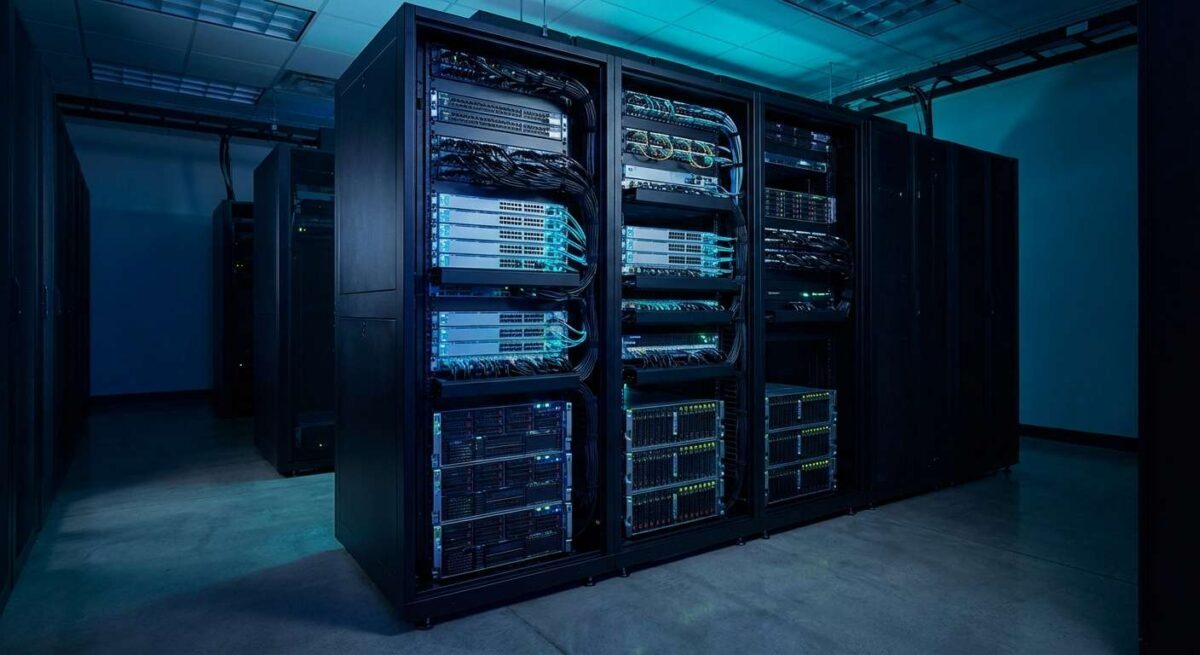
Bright Haven Network Infrastructure | Enterprise Architecture
At Bright Haven, we engineer our data networks with the same precision as our electrical systems. Discover the enterprise-grade, highly-available infrastructure hosting our digital presence.