
Network Traffic Engineering & QoS: Technical Architecture
Network Traffic
Engineering & QoS
Bright Haven Electric architects end-to-end traffic engineering solutions to guarantee bandwidth, minimize latency, and ensure the flawless delivery of mission-critical applications.
Moving beyond rudimentary FIFO queuing, we implement deep queuing disciplines and packet marking directly from the internal switching core to the edge firewall for absolute congestion control.
End-to-End Traffic Control
Engineering deterministic pathways for real-time and bulk data payloads.
CoS & Packet Marking
To prevent network congestion from degrading time-sensitive applications, traffic must be categorized and prioritized the moment it enters the network.
- Hardware-Level Classification: Implementation of ingress classifiers on enterprise
switching hardware (e.g., Juniper EX-Series) to identify traffic types based on source VLAN, IP, or
protocol, placing them into specific forwarding classes (
fc-critical,fc-media,fc-gaming,fc-scavenger). - DSCP Rewrite Rules: Configuration of hardware rewrite rules to inject standard
Differentiated Services Code Point (DSCP) tags into the IP header of every packet. This ensures
downstream routers and firewalls instantly recognize the packet's priority level (e.g., Expedited
Forwarding
effor critical VoIP,cs3for media,cs1for scavenger data).
Schedulers & Priority Queues
Once classified, traffic is managed by strict scheduling algorithms to govern how switch buffers and backplane bandwidth are allocated under heavy load.
- Strict-High Priority Queuing: Mission-critical traffic and real-time data (VoIP, control plane signaling) are assigned to strict-high priority queues, guaranteeing immediate transmission ahead of all other traffic to eliminate jitter.
- Weighted Bandwidth Allocation: Non-critical forwarding classes are governed by precise scheduler maps. We allocate guaranteed transmit rates and buffer sizes (e.g., reserving 30% for media streaming) while strictly throttling background tasks (e.g., limiting scavenger traffic like backups to 5%), preventing bulk transfers from inducing bufferbloat.
Stateful Edge Shaping
ISP-provided hardware often utilizes rudimentary FIFO queuing, resulting in massive latency spikes when a WAN connection is saturated.
- Artificial Bottlenecking: We configure the edge firewall (OPNsense) to artificially cap total ingress and egress bandwidth slightly below the physical link capacity. This forces the enterprise firewall to handle packet queuing rather than the ISP modem.
- Stateful Queue Matching: The firewall intercepts outbound and inbound packets,
reading the DSCP tags applied by the core switch. Traffic is placed into corresponding shaped pipes
(
qCritical,qMedia,qBrowsing) with weighted distribution, ensuring that a saturated download does not crush concurrent critical uploads. - Compute-Level Congestion Control: At the server and container level, we tune the host OS network stack utilizing advanced TCP congestion control algorithms like TCP BBR (Bottleneck Bandwidth and Round-trip propagation time) and fq (Fair Queueing) to ensure smooth packet pacing and optimal throughput over high-latency or fluctuating transit links.
Initiate an Infrastructure Project
Submit your technical requirements or RFP document for a comprehensive engineering review and proposal.
Request Engineering ProposalQoS & Traffic Engineering Logs
Browse our recent technical updates regarding routing capacity, DSCP policies, and scheduler deployments.
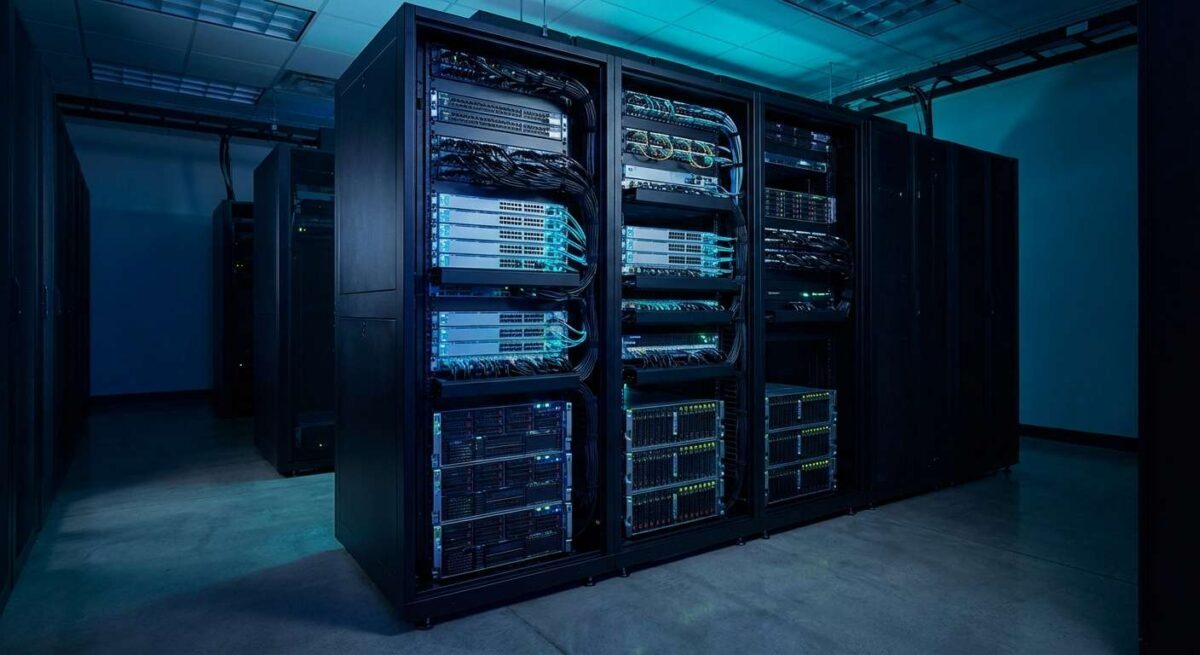
Bright Haven Network Infrastructure | Enterprise Architecture
At Bright Haven, we engineer our data networks with the same precision as our electrical systems. Discover the enterprise-grade, highly-available infrastructure hosting our digital presence.