
Hazardous Location Wiring MN: Class II, Div 1 & 2 Specialists
Hazardous Location Wiring MN
Grain dust is more explosive than gunpowder. We install Class II, Division 1 & 2 electrical systems that keep your elevator, mill, or fertilizer plant safe, compliant, and insurable.
It only takes five elements for a grain elevator explosion: Fuel (Dust), Oxygen, Confinement, Dispersion, and Ignition. We control the ignition source. A standard limit switch or unsealed outlet in a grain pit isn't just a code violation—it's a bomb detonator.
Class II Locations: Understanding the Danger Zones
The NEC defines hazardous locations by the type of fuel present. In West Central MN agriculture, we deal almost exclusively with Class II (Combustible Dust). Knowing the difference between Division 1 and 2 saves you money without compromising safety.
Div 1 (Critical)
- Where: Normally dusty. Inside grain legs, pits, distributor rooms.
- Wiring: Rigid Metal Conduit (RMC) ONLY. Explosion-proof seals within 18".
- Mistake: Using standard motors. Must be Class II XP rated.
Div 2 (Secondary)
- Where: Abnormally Dusty. Accidental leaks, adjacent rooms.
- Wiring: Dust-Tight. Sealed conduit, NEMA 12/9 enclosures.
- Mistake: Hot lights. Surface temp must stay below ignition point.
Explosion-Proof Hardware Installation
You can't buy this stuff at a big box store. We source industrial-grade components designed to contain an internal explosion without letting a flame escape to the dusty atmosphere.
Class II LED Lighting
Old high-pressure sodium fixtures run hot (hundreds of degrees). We retrofit facilities with Class II Rated LEDs that run cool and are fully sealed. These fixtures are T-Code rated to ensure their surface temperature never exceeds the ignition point of grain dust.
TEFC & XP Motors
For grain legs and augers in Div 1 areas, we install Explosion-Proof (XP) motors. Unlike standard Totally Enclosed Fan Cooled (TEFC) motors, XP motors are built to withstand an internal fault without rupturing the casing.
Seal-Off Fittings (EYS)
The most critical component. We install EYS sealing fittings filled with expanding cement (Chico) to block gases and flames from traveling through the conduit system. This isolates an explosion to a single box rather than letting it propagate through the entire building.
Intrinsically Safe Systems
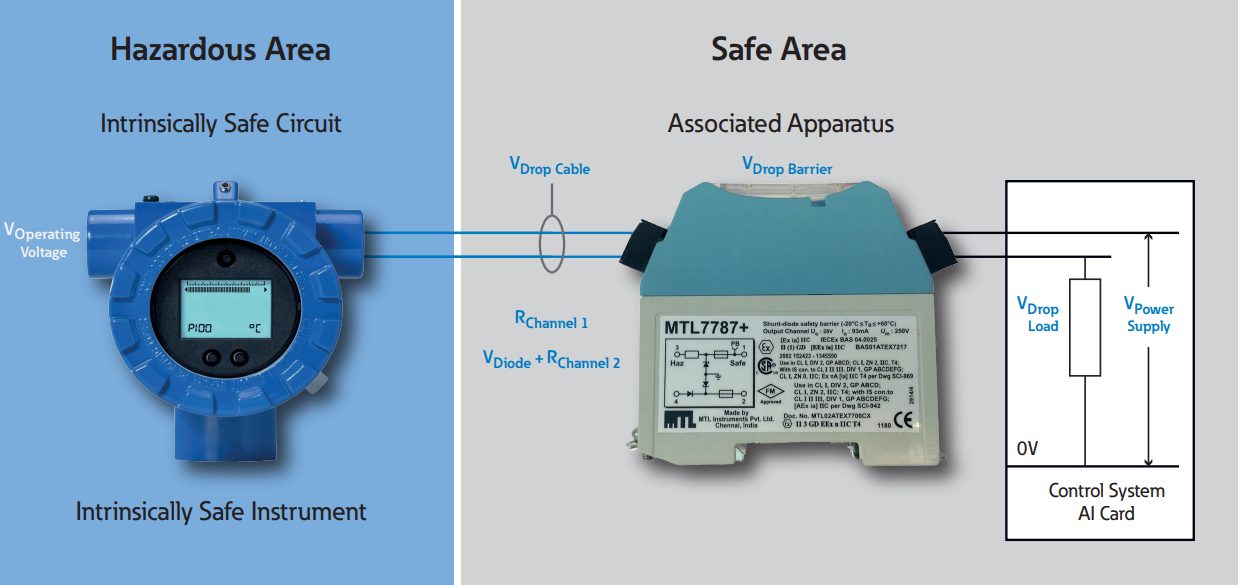
Stop the spark before it starts. For low-voltage sensors (bearing temperature, belt alignment, motion), running heavy rigid conduit is expensive and overkill. We use Intrinsically Safe (IS) Barriers.
- How It Works: An IS barrier limits the electrical energy (voltage and current) sent to the hazardous area. Even if the wire is cut or shorted, there literally isn't enough energy to create a spark capable of igniting dust.
- The Benefit: Allows us to use standard cabling methods for sensors inside the hazard zone, drastically reducing installation cost while maintaining Div 1 safety.
- Application: Perfect for 4-20mA sensors, rubbing block sensors, and bearing temp monitors.
Is Your Elevator Up to Code?
Insurance audits are getting stricter. If you have open junction boxes or standard outlets in your grain handling areas, you are at risk. Call us for a hazardous location compliance audit.
Schedule a Compliance AuditServing Co-ops & Private Elevators in WC MN
Latest Updates & Projects
Browse our recent articles and case studies related to hazardous location wiring below.