
Electrical Shock Prevention: A Complete Home Safety Guide | Bright Haven
 Chadwick Ferguson
Mar 16, 2026
Chadwick Ferguson
Mar 16, 2026
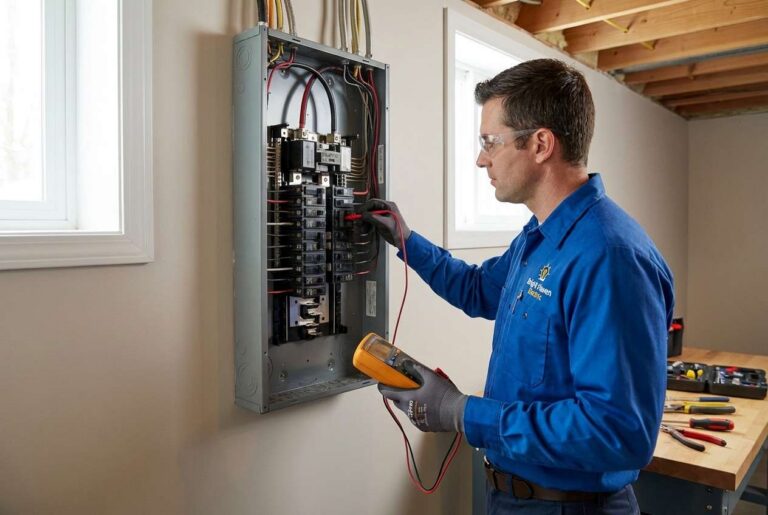
Electrical Shock Prevention: What Every Homeowner Must Know
Getting shocked is more than unpleasant—it can be lethal. An electrical impulse as small as 14 milliamps is enough to kill a person. The current drawn by a plug-in nightlight is more than sufficient to do the job. Here’s what you need to know to protect your family.
Electricity powers nearly every aspect of modern life, from the morning coffee maker to the security system watching over your home while you sleep. We depend on it completely—but very few homeowners understand how dangerous it actually is, or how quickly a seemingly minor issue behind a wall can become life-threatening.
Whether you’re tackling a remodeling project, troubleshooting a tripped breaker, or simply wondering if your older home’s wiring is still safe, this guide covers the electrical shock prevention fundamentals that every homeowner needs to understand.
The Lethal Threshold: A current of just 14 milliamps can cause fatal cardiac arrest. For perspective, the current flowing through a typical toaster is approximately 10 amps—more than 700 times the lethal threshold. Even 10 milliamps causes painful, uncontrollable muscle spasms, while 20 milliamps can trigger heart fibrillation.
Understanding the Basics of Electrical Current
To understand why electrical shock prevention matters, you need a basic grasp of how alternating current (AC) electricity works in your home. Three fundamental properties govern every circuit:
Voltage (V)
The force or pressure that pushes electrons through a conductor. In the United States, most residential outlets supply 120V AC. Larger appliances like dryers and ranges use 240V. Higher voltage means greater potential for harm.
Current (A)
The number of electrons flowing through the conductor, measured in amperes (amps). Current is what actually causes injury during a shock. Even tiny amounts passing through the heart can be fatal.
Resistance (Ω)
The opposition to current flow, measured in ohms. Dry skin provides significant resistance, but wet skin, cuts, or sweat dramatically reduce resistance—allowing far more dangerous current to flow through your body.
These three values are related by Ohm’s Law: Voltage = Current × Resistance. This is why wet conditions are so dangerous. Water reduces your body’s resistance, allowing the same household voltage to push far more current through you. It’s also why GFCI-protected outlets are required near any water source—they detect the moment current escapes its intended path and cut the power in a fraction of a second.
Before You Start Any Electrical Work
Even projects that aren’t strictly “electrical work”—like removing drywall, pulling old paneling, or drilling into walls—can expose live wires. Before touching anything behind a wall surface, there are essential steps that separate safe homeowners from statistics.
Essential Pre-Work Safety Steps
- Verify your test tools first. Before relying on any voltage tester, prove it works by testing it on a known-live circuit. A dead meter will give you a false sense of safety.
- Turn off the circuit breaker for the area you’ll be working in. But don’t stop there—verify the circuit is dead using a Non-Contact Voltage Tester (NCVT).
- Never assume all wires in a box are dead. In older homes, it’s common to find wires from multiple circuits passing through the same junction box. One breaker only controls one circuit. The others may still be live and lethal.
- Test every wire, not just the outlet. After the wall surface is removed, sweep the entire exposed cavity with your NCVT. It’s not unusual to discover a second or even third live circuit you didn’t know existed.
- Check for reverse polarity. Faulty wiring can energize conductors that should be neutral. Use a receptacle tester with GFCI to identify mis-wired outlets before you touch anything downstream.
Listen to Your Circuit Breaker
Your circuit breaker is one of the most important safety devices in your home. When it trips, it’s telling you something. Pay attention.
Trips Immediately After Reset
This is the most serious warning. A breaker that refuses to stay on is detecting a severe electrical fault—a short circuit, ground fault, or catastrophic wiring failure. Do not force it back on. Every attempt risks fire or arc flash. Call a licensed electrician immediately.
Trips at Specific Times of Day
If a breaker trips every time you run a hair dryer or vacuum cleaner, the circuit is either overloaded or there’s a developing fault in the wiring. This pattern is your early warning system—address it before it becomes an emergency.
Repeated Trips Throughout the Day
Multiple trips in a single day or week—even if the breaker resets each time—indicate a worsening condition. The problem is intermittent now, but intermittent faults become permanent ones. Get it inspected before it escalates.
If an Electrical Fire Starts
Knowing how to respond to an electrical fire is as important as preventing one. Firefighters emphasize two critical decisions: fight or flee, and never use water.
Critical Rule: Never Throw Water on an Electrical Fire
Water conducts electricity. Throwing water on an electrical fire can cause the fire to spread, create an electrocution hazard, or trigger a violent steam explosion. Always use a Class C or ABC-rated chemical fire extinguisher.
If you have any doubt about your ability to contain the fire, get out of the house immediately and call the fire department from outside. Never let a fire get between you and your exit.
If you decide the fire is small enough to fight, firefighters recommend the PASS method for using a fire extinguisher:
Pull the safety pin from the extinguisher handle
Aim the nozzle at the base of the fire, not the flames
Squeeze the handle to release the extinguishing agent
Sweep side to side until the flames are fully out
Warning Signs Hiding in Plain Sight
Apart from obvious sparks or a breaker that won’t stay on, there are subtle indicators of dangerous electrical conditions that every homeowner should watch for:
Flickering or Dimming Lights
Cause: Loose wiring splices, a failing fixture, or a deteriorating connection at the panel. Action: If isolated to one fixture, cut power and inspect. If building-wide, it could indicate a failing main breaker or service entry problem.
Warm Outlets or Faceplates
Cause: An oversized electrical load, undersized wiring, or a loose splice generating heat. Note: dimmer switches can feel warm under normal operation—but should never be too hot to touch. Action: Cut power, investigate for melted connections or burned insulation.
Wobbly Switches or Receptacles
Cause: The device is improperly mounted, or the electrical box has come loose from the stud. Action: Cut power, remove the faceplate, and tighten mounting screws. If the box itself is loose, it needs to be resecured to the framing.
Wobbling Ceiling Fans
Cause: Fan is out of balance, has loose hardware, or is installed on an electrical box not rated for fan support. Standard outlet boxes cannot safely hold a ceiling fan. Action: Cut power and inspect. If needed, install a retrofit fan-rated box (e.g., Arlington Steel One Box).
GFCI Outlets That Trip Repeatedly
Cause: A ground fault downstream, or a worn-out GFCI device. Action: Move the appliance to a different GFCI and test. If the new GFCI also trips, the appliance is suspect. If only the original trips, the GFCI or its downstream wiring needs professional attention.
Small Shocks from Appliances
Cause: Older appliances—especially refrigerators with defrost circuits—can develop small leakage currents through worn internal insulation. This is especially dangerous on conductive concrete floors in garages and basements. Action: Replace the appliance and ensure the outlet has GFCI protection.
Dangerous Conditions Found During Remodeling
Remodeling work frequently exposes wiring conditions that have been hidden behind walls for decades. If you uncover any of the following, stop work immediately and call a licensed electrician before proceeding:
Stop Work Immediately If You Find:
- Knob-and-tube wiring: Bare copper wires stretched between porcelain insulators. This obsolete system has no grounding conductor, degraded insulation, and is a major fire risk—especially if it’s been buried under blown-in insulation.
- Burned or melted wire insulation: Evidence of past overloads, lightning strikes, or mis-wiring. Damaged insulation can cause arcing faults that ignite surrounding wood or insulation materials.
- Blackened or discolored switches and outlets: Any browning, char marks, or melted plastic on devices indicates severe overheating. The wiring behind these devices needs professional inspection.
- Water stains on or around the service panel: Water intrusion into the electrical panel—common in older homes with poor meter seals—is extremely dangerous. Do not open the panel. Call an electrician.
- Sloppy or unpermitted electrical work: Coffee cans used as junction boxes, duct tape instead of wire connectors, exposed splices outside of boxes—these are fire and electrocution hazards that require professional code corrections.
- Aluminum branch circuit wiring: Solid aluminum wiring in branch circuits (common in 1960s–1970s homes) is prone to oxidation and loose connections that generate extreme heat at termination points.
Essential Tool: The Digital Multimeter (DMM)
A digital multimeter—especially one with a built-in non-contact voltage tester—belongs in the toolkit of anyone who does maintenance or remodeling around the home. Beyond testing for live voltage, a DMM can:
- Test battery voltage on portable devices and backup systems
- Check light bulb continuity when you can’t visually see a broken filament
- Test solenoid valves on dishwashers, ice makers, and irrigation systems for broken coils
- Verify test lead integrity before relying on the meter’s readings
Safety note: Always use a meter rated by UL or an equivalent accredited testing organization, with shrouded connectors and finger guards on all test leads. Inspect leads for physical damage before every use.
The Homeowner’s Electrical Safety Checklist
Whether you’re doing minor maintenance or preparing for a remodeling project, follow these rules to protect yourself and your family:
- Never work on live circuits. Always turn off the breaker and verify with an NCVT before touching anything.
- Prove your tools work by testing on a known-live source before relying on a “no voltage” reading.
- Never work alone. Having someone nearby who can call for help or shut off a breaker could save your life.
- Use only properly rated test equipment. Inspect test leads before every use and replace any that show damage.
- Keep a Class C or ABC fire extinguisher accessible wherever electrical work is being performed.
- Test your GFCI outlets monthly using the built-in TEST and RESET buttons.
- Never assume old wiring is safe. Age, rodent damage, moisture, and past DIY work can all compromise insulation integrity.
- When in doubt, always call a licensed electrician. No project is worth your life.
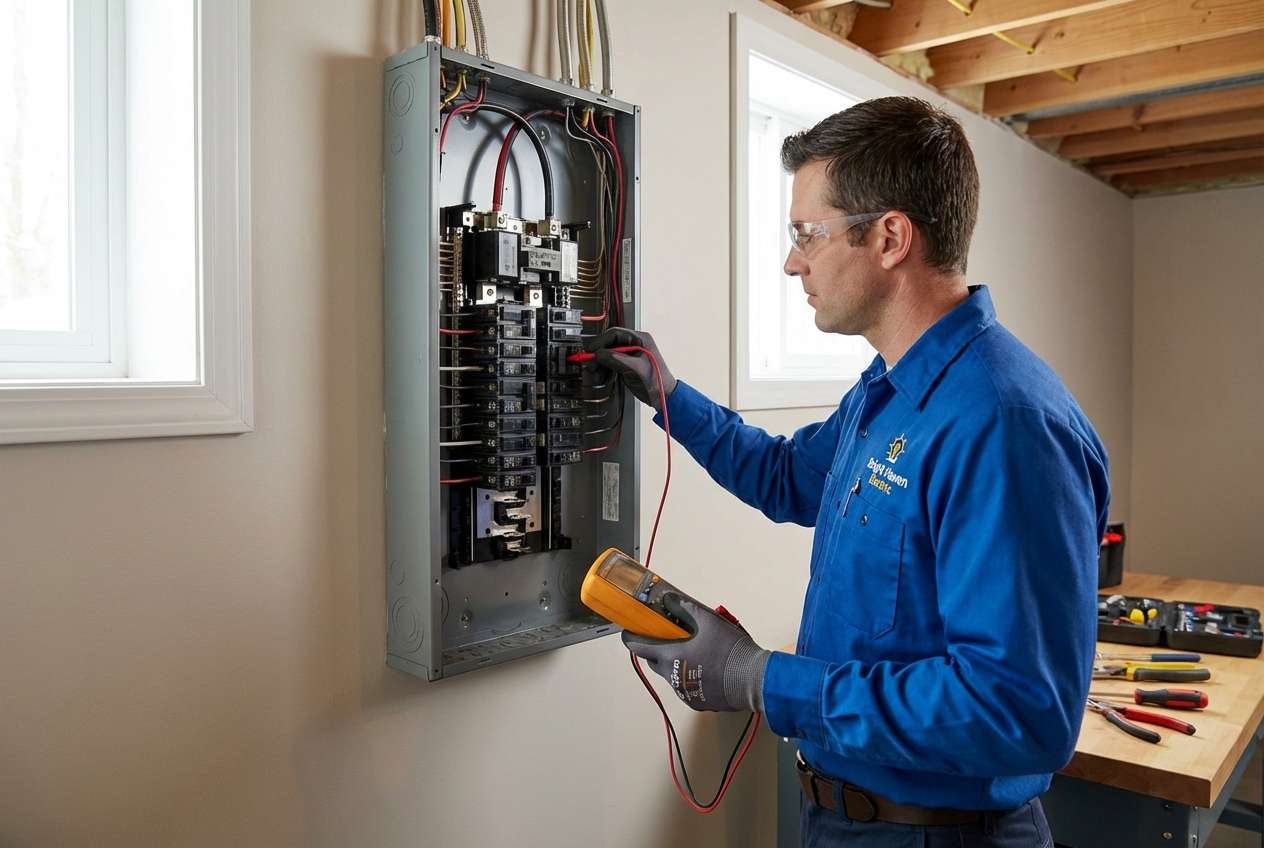
Don’t Risk Your Family’s Safety
Electrical hazards are often invisible until they become emergencies. If your home has aging wiring, frequently tripping breakers, warm outlets, or any of the warning signs described above, it’s time for a professional safety inspection.
Bright Haven Electric LLC provides comprehensive electrical safety audits, AFCI/GFCI upgrades, panel inspections, and full home rewiring services across West Central Minnesota.
About the Author
Chadwick Ferguson
Chadwick Ferguson is the owner and licensed Master Electrician behind Bright Haven Electric LLC, serving West Central Minnesota from his base in Milan, MN. With deep expertise in residential, commercial, and agricultural electrical systems, he specializes in modern energy solutions including Level 2 EV charger installations, automatic standby generators, and comprehensive electrical panel upgrades.
Chadwick is committed to providing safe, code-compliant, and reliable electrical work to his rural Minnesota community. As the author of the BHElectric blog, he shares practical insights and expert guidance to help homeowners and businesses navigate the complexities of their electrical systems.