
Circuit Breaker Tripping: Overloads & Short Circuits
 Chadwick Ferguson
Mar 6, 2026
Chadwick Ferguson
Mar 6, 2026
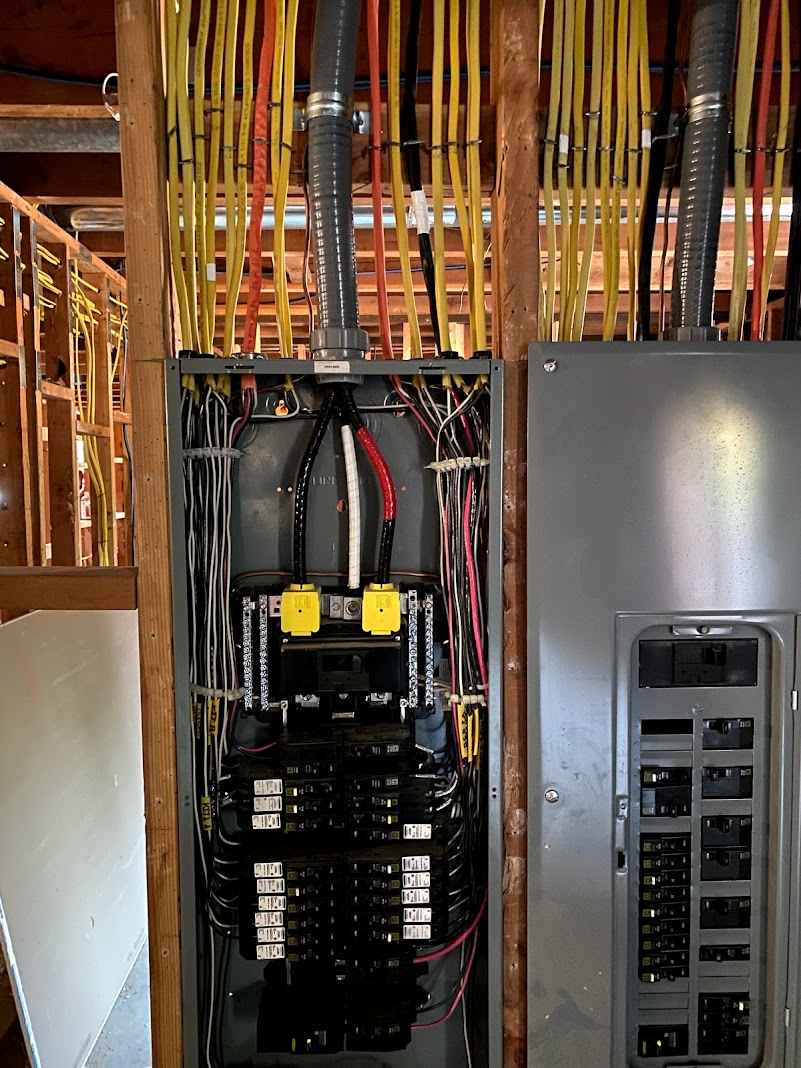
Circuit Breaker Tripping Explained
Before you head to the basement to flip a switch back to the “on” position, here is an inside look at how your electrical panel protects your home from a raging fire.
We’ve all been there: You’re running the microwave while someone is blow-drying their hair, and suddenly the room goes dark. A breaker usually trips for one of two reasons: the circuit is overloaded, or there’s a fault.
In everyday homes, overloads are far more common. That’s usually what happens when too many high-draw devices end up on the same branch circuit. A short circuit or a ground fault is a much more serious issue, causing the breaker to react much faster. Let’s look at what’s actually happening inside your electrical panel when the power cuts out.
Watch it in action
Curious to see exactly what happens inside that plastic box during a massive fault? Warped Perception recorded an incredible slow-motion capture showing how common breakers violently trip under duress to save your home.
Watch the YouTube Video1. The Mechanics of a Tripped Breaker
Almost every modern home electrical panel relies on thermal-magnetic circuit breakers. That means the breaker has two distinct ways of shutting down the power based on what kind of problem it detects on the line.
The Thermal Trip (Slow Blow)
This is your standard overload. Say you have a space heater and a vacuum running on the same 15-amp bedroom circuit. That pulls more electricity than the wiring is rated for. Inside the breaker, a little metal piece called a bimetallic strip absorbs that extra heat. As it warms up, the metal physically bends. Eventually, it bends far enough to pop the spring-loaded lever and kill the power before the wires inside your walls can melt. It’s a reliable, slow-acting safety net.
The Magnetic Trip (Short Circuit)
A short circuit happens when a hot wire directly touches a neutral or ground wire—maybe a framing nail went through a wire, or a mouse chewed the insulation. Electricity floods the line instantly. Instead of waiting for a metal strip to heat up, this massive surge hits an electromagnetic coil inside the breaker. The coil creates a strong magnetic field that yanks the breaker switch open in a fraction of a second. It stops the flow of electricity before a fire can start.
The Hydraulic-Magnetic Trip
Unlike standard breakers that rely on heat to warp a bimetallic strip, some premium breakers (like certain Leviton models) use fluid engineering. They have a magnetic coil wrapped around a tube filled with silicone fluid. Surges pull a small iron core through that fluid. Small surges pull it slowly, but massive short-circuits pull it instantly to trip the switch. Because they aren’t triggered by ambient heat, these are great for hot environments like a Minnesota garage in July where a standard thermal breaker might nuisance trip.
2. Why Old Breakers Fail to Prevent Circuit Breaker Tripping Disasters
In older properties around West Central Minnesota, it’s common to find obsolete, hazardous, or historically problematic electrical panels like Federal Pacific, Zinsco, or Pushmatic. Some of these older panel series have documented failure-to-trip concerns under certain fault conditions.
Without proper overcurrent protection, dangerous overheating can occur inside the wiring system, increasing the risk of electrical fire. That’s why panel inspections are critical.
Modern Protection: AFCIs
If there’s one recent technological leap in circuit breaker technology you should know about, it’s the Arc Fault Circuit Interrupter (AFCI).
Standard breakers catch overloads and dead shorts, but they don’t always catch arcs (sparks jumping across broken or loose wires). Modern AFCIs use electronics to continuously monitor the electrical waveform for signatures associated with hazardous arcing. When they detect that erratic frequency, they trip the circuit before the arcing can ignite surrounding material.
Precision GFCI Circuit Breaker Tripping
We all know Ground Fault Circuit Interrupters (GFCIs) belong near water. But how do they actually detect a shock hazard?
They use a small sensing ring called a
Current Transformer (CT). Both the hot and the neutral wires pass through this ring.
Normally, the current going out exactly matches the current coming back.
If even a tiny trickle of electricity escapes—say, through water on a counter, or through a person—that
balance is broken. The CT senses that the returning power is weaker than the outgoing power.
The Life-Saving Reaction
The electronics inside the GFCI realize power is leaking to ground and immediately open the circuit. That incredibly fast reaction is what prevents a dangerous shock from becoming fatal.Need Your Panel Checked?
If your breakers are constantly tripping, or you live in an aging home with an outdated panel, don’t guess when it comes to electrical safety.
At Bright Haven Electric LLC, our expert electricians provide comprehensive electrical panel inspections and AFCI/GFCI upgrades throughout West Central Minnesota.
About the Author
Chadwick Ferguson
Chadwick Ferguson is the owner and licensed Master Electrician behind Bright Haven Electric LLC, serving West Central Minnesota from his base in Milan, MN. With deep expertise in residential, commercial, and agricultural electrical systems, he specializes in modern energy solutions including Level 2 EV charger installations, automatic standby generators, and comprehensive electrical panel upgrades.
Chadwick is committed to providing safe, code-compliant, and reliable electrical work to his rural Minnesota community. As the author of the BHElectric blog, he shares practical insights and expert guidance to help homeowners and businesses navigate the complexities of their electrical systems.