
Bright Haven Network Infrastructure | Enterprise Architecture
 Chadwick Ferguson
Mar 4, 2026
Chadwick Ferguson
Mar 4, 2026
Enterprise Engineering
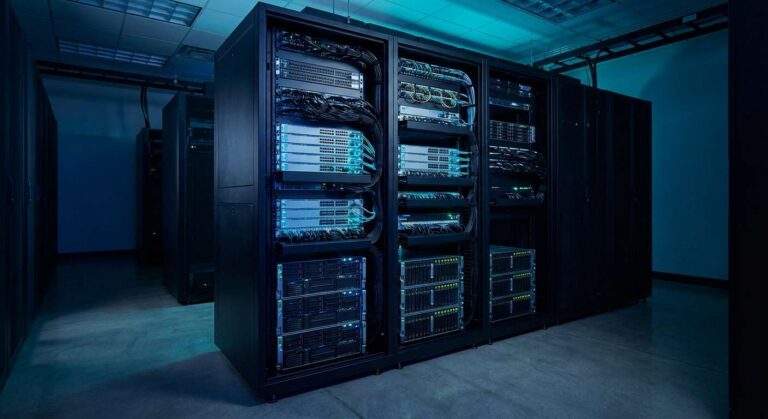
The Bright Haven network infrastructure is powered by a highly available, self-hosted Kubernetes architecture seamlessly integrated with physical networking hardware and robust perimeter security.
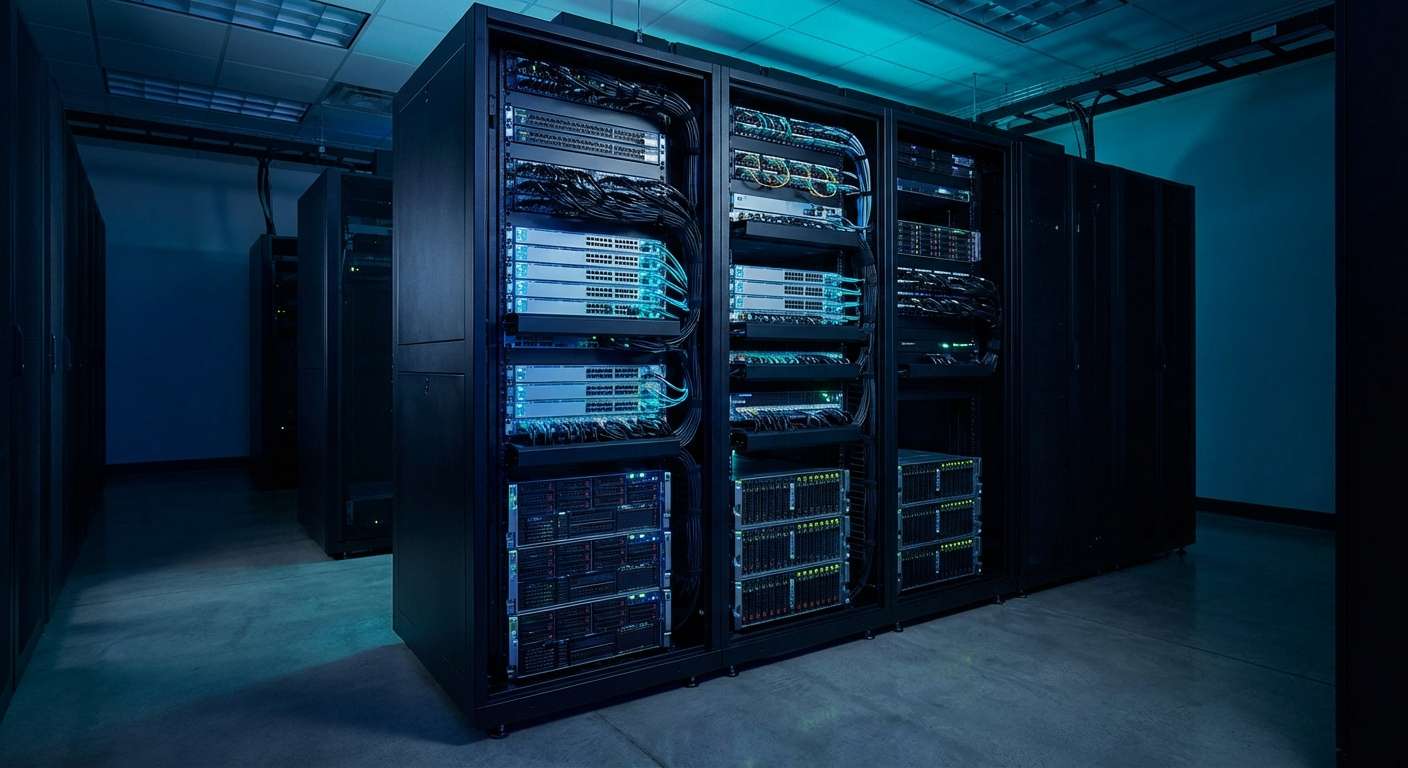
When managing digital infrastructure, stability and speed are paramount. Therefore, we never rely on shared web hosting arrays. Instead, the Bright Haven network infrastructure operates on a deeply optimized private cloud. Ultimately, our multi-layered enterprise architecture provides high availability with layered redundancy, maximum performance, and strong workload isolation and segmentation.
Hardwired by Design: The Core of the Bright Haven Network Infrastructure
Our first rule of networking is profoundly simple: Wi-Fi is a fallback position, not a primary strategy. On an average day, our network dynamically manages up to 60 distinct hosts. However, out of all those devices, only about 6 to 10 ever rely on a wireless connection.
Furthermore, everything from our virtualization hosts to our IoT interfaces is primarily hardwired. This physical connection guarantees zero wireless interference and minimal latency. As a result, we achieve massive throughput and near-bare-metal performance across our Virtual Functions (SR-IOV) within the Bright Haven network infrastructure.
The Technical Foundation of Our Architecture
Powering our high-speed, 10GbE backbone involves advanced logical separation. Specifically, here is how we execute enterprise-grade operations behind the scenes:
Zero Trust & Edge Security
First and foremost, our perimeter is guarded by OPNsense stateful firewalls. These operate alongside IDS/IPS and application-aware filtering where appropriate. Consequently, we expose absolutely no inbound ports to the internet directly. Instead, all public-facing services securely transit through Cloudflare (Zero Trust) Tunnels. This method securely publishes our origins without exposing inbound ports, while leveraging Cloudflare’s edge network for SSL termination, DDoS protection, and optional caching where appropriate.
Hardware Segmentation
Our dual-stack, LAG/LACP-connected Juniper core switch strictly isolates all internal IPv4 and IPv6 traffic via discrete VLANs. By implementing hardware-enforced ACLs and firewall filters alongside Class of Service (CoS) prioritizations, unauthorized traffic is dropped in hardware before it reaches the routing engine. IoT devices, cameras, and core servers remain deeply separated at the silicon layer.
Kubernetes & eBPF
Moreover, our containerized workloads run on an immutable OS (Talos Linux) across a high-availability cluster. For networking, we replaced standard proxies with Cilium’s highly advanced eBPF native routing. We peer BGP directly with our switching fabric within the Bright Haven network infrastructure. This reduces reliance on NAT, avoids common proxy bottlenecks, and lets us utilize BIG TCP to improve throughput by reducing per-packet overhead on high-speed links. Finally, to integrate cleanly with traditional routing domains, we actively publish our BGP routes to OSPF and OSPFv3.
Future Scalability
In addition, we never stop engineering. Future plans include transitioning to a high-density VTEP collapsed spine topology. This will utilize enterprise-grade Broadcom Trident II+/3 silicon for the new core switch. As a result, this will allow us to migrate the current L3 core switch downward to serve as a robust leaf aggregation and access layer.
Containerized Stack
Meanwhile, the websites utilizing the Bright Haven network infrastructure run on an aggressively tuned LEMP-like stack. Each site is processed by decoupled containers leveraging a heavily optimized Nginx proxy. Furthermore, a multi-node highly available Redis cache tier handles object caching. This is entirely governed by custom TCP health checks via an HAProxy frontend.
Advanced Storage Topologies
Additionally, our databases run on distributed, highly available block storage explicitly pinned to fast SSDs for sub-millisecond low-latency I/O. For massive bulk storage, we map our NAS arrays dynamically to multiple virtual machines using `virtio-fs` for high-performance host-to-guest file sharing in scenarios where it outperforms traditional network filesystems.
Hardware Virtualization
Finally, our Proxmox hypervisor nodes interact directly with the physical network via 10GbE DAC (twinax) cabling. By provisioning our virtual machines with dedicated SR-IOV Virtual Functions straight from the physical network adapters, we bypass most virtual switching overhead for performance-sensitive workloads.
Technical Mastery
If engineering highly available, enterprise data networks is what we do in our spare time, imagine the level of precision and dedication we bring to your projects. Discover what Bright Haven Electric can offer you.
About the Author
Chadwick Ferguson
Chadwick Ferguson is the owner and licensed Master Electrician behind Bright Haven Electric LLC, serving West Central Minnesota from his base in Milan, MN. With deep expertise in residential, commercial, and agricultural electrical systems, he specializes in modern energy solutions including Level 2 EV charger installations, automatic standby generators, and comprehensive electrical panel upgrades.
Chadwick is committed to providing safe, code-compliant, and reliable electrical work to his rural Minnesota community. As the author of the BHElectric blog, he shares practical insights and expert guidance to help homeowners and businesses navigate the complexities of their electrical systems.