
Backup Generator Installation FAQ & How-To
 Chadwick Ferguson
Apr 1, 2026
Chadwick Ferguson
Apr 1, 2026
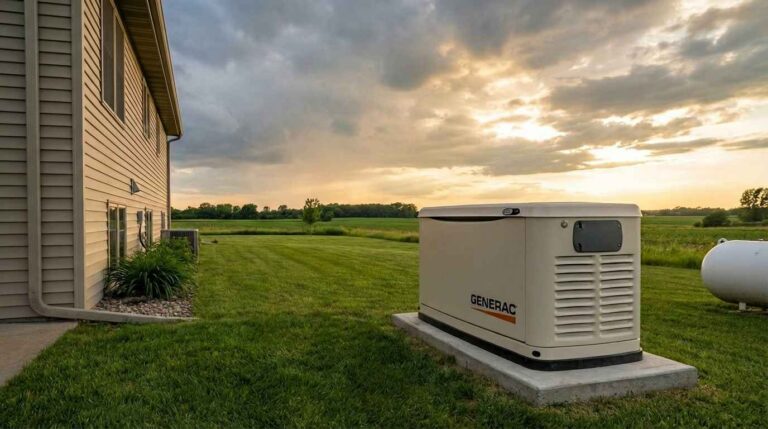
When the Power Goes Out, Will Your Home Stay On?
Power outages in West Central Minnesota are not a question of if — they are a question of when. A backup generator installation gives your family the peace of mind that comes from knowing the lights, heat, and well pump never stop.
Read more in: Backup Power & Resilience, Residential Service Upgrades
A backup generator installation is the single most effective way to protect your home against the reality of extended power outages. In rural West Central Minnesota, ice storms, straight-line winds, and transformer failures can leave homes without power for hours — and sometimes days. Moreover, a standby generator detects the outage automatically and restores power to your home within seconds, without you lifting a finger. In contrast, a portable generator requires manual setup, extension cords, and carries serious carbon monoxide risks. As a result, more homeowners are choosing permanent standby generator installations to keep their families safe and comfortable year-round.
Why West Central Minnesota Needs Backup Generator Installation
Our service area stretches across some of the most storm-exposed terrain in the state. Specifically, long rural feeder lines, aging utility infrastructure, and severe seasonal weather create a perfect recipe for extended outages. Consequently, backup generator installation has become one of the most requested services at Bright Haven Electric. Here is why:
Rural Power Grid Vulnerability
Long Feeder Lines:
Homes in Big Stone, Lac qui Parle, Swift, and Yellow Medicine counties often sit at the end of utility feeder lines that stretch 15 to 30 miles from the nearest substation. As a result, a single downed pole or failed transformer can cut power to dozens of homes for an extended period. Furthermore, repair crews in rural areas face longer response times than their metro counterparts.
Severe Weather Exposure:
West Central Minnesota experiences an average of 30 to 40 thunderstorm days per year, along with significant ice storm and blizzard events each winter. In particular, ice loading on overhead lines causes some of the longest outage events in the region. A backup generator installation ensures your home stays powered through all of it.
Key Point: According to the U.S. Energy Information Administration, the average American home experiences over 5 hours of power interruptions per year. In rural areas with long distribution lines, that number is significantly higher. A standby generator eliminates the impact entirely.
Who Depends on Backup Power the Most?
For homeowners who rely on well pumps for water, sump pumps for flood prevention, or medical equipment that must stay energized, a backup generator installation is not a luxury — it is essential infrastructure. In addition, homes with livestock, walk-in freezers, or home-based businesses face significant financial losses during extended outages. Therefore, investing in reliable backup power protects both your family and your livelihood. For a deeper look at what severe weather means for your electrical system, see our complete guide to backup generators in West Central MN.
Standby vs. Portable Backup Generator Installation
Every backup generator falls into one of two categories: standby or portable. As a result, understanding the difference is the first step to choosing the right backup generator installation for your home and budget.
Generator Type Breakdown
Standby Generator (Permanent Installation):
A standby generator is a permanently installed, weatherproof unit that sits on a concrete pad outside your home. It connects directly to your electrical panel through an automatic transfer switch and runs on propane or natural gas. When the power goes out, the automatic transfer switch detects the outage and consequently starts the generator within 10 to 30 seconds — without any action from you. As a result, your home power is restored automatically, even if you are away. Standby units typically range from 10 kW to 24 kW+ for residential applications.
Portable Generator (Manual Operation):
In contrast, a portable generator runs on gasoline, sits in your garage or driveway, and requires manual setup. You must therefore start it by hand, run extension cords to individual appliances, and refuel it periodically. Portable generators typically produce 3,000 to 10,000 watts and cannot safely power an entire home. Furthermore, they pose a serious carbon monoxide risk if operated too close to windows, garages, or enclosed spaces.
Pro Tip: The Consumer Product Safety Commission reports that portable generators cause an average of 85 carbon monoxide deaths per year in the United States. If you use a portable generator, it must be placed at least 20 feet from your home with the exhaust pointing away from all windows and doors. A standby generator installation eliminates this risk entirely because the unit is permanently placed outdoors with proper clearances.
Portable Generator
Manual
Requires hand-start, extension cords
3–10 kW typical output
Standby + Interlock
Semi-Auto
Manual start, panel-level transfer
Select circuits powered
Standby + ATS
Automatic
Detects outage, starts in 10–30 sec
Whole-home or essential circuits
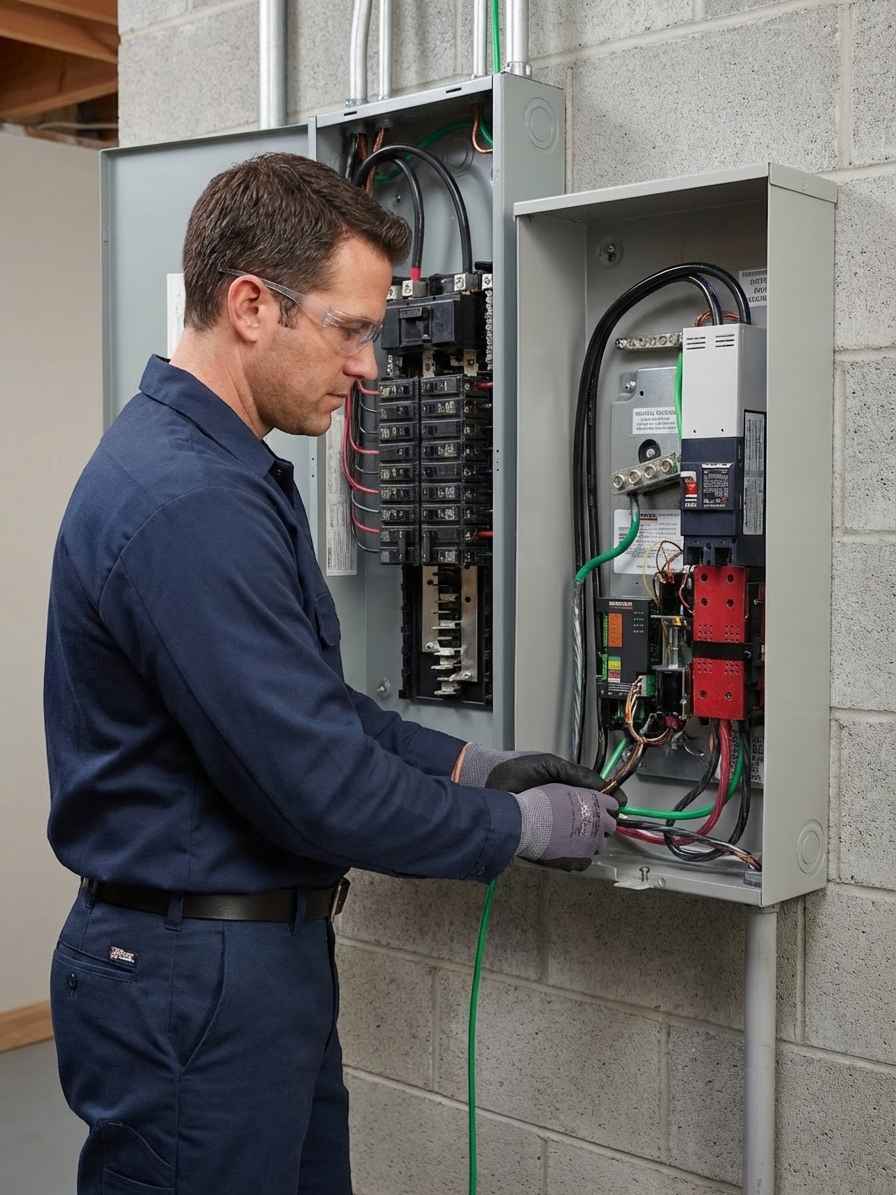
What Your Electrician Checks Before a Backup Generator Installation
A backup generator installation is not a drop-and-go project. Because a standby generator ties directly into your home’s electrical panel and fuel system, your electrician must first verify that the installation is safe, code-compliant, and properly sized. Specifically, a professional site survey covers these critical items:
Professional Site Survey Checklist
- Load Calculation: Your electrician calculates the total electrical demand of the circuits you want to power during an outage. This determines the minimum generator size in kilowatts. Undersizing causes the generator to overload and shut down when you need it most. Additionally, the NEC requires that generator circuits be sized properly to prevent overheating and fire hazards.
- Transfer Switch Selection: Every backup generator installation requires a transfer switch to safely isolate your home from the utility grid. An automatic transfer switch (ATS) monitors utility power and handles everything automatically. A manual interlock kit is more affordable but requires you to physically switch the power source. For homes with well pumps, sump pumps, or medical equipment, an ATS is strongly recommended.
- Fuel Source Verification: In West Central Minnesota, most backup generator installations run on propane. Your electrician and propane provider will confirm that your existing tank has adequate capacity — or recommend an upgrade. Natural gas connections, where available, provide unlimited fuel without delivery logistics.
- NEC Placement Requirements: The National Electrical Code and local ordinances dictate minimum clearances from windows, doors, property lines, and soffit vents. Your electrician identifies the optimal pad location that satisfies code while minimizing the wire run from the generator to your panel.
- Panel Capacity & Condition: If your panel is older, full, or undersized (100-amp service is still common in our area), the electrician may recommend a panel upgrade as part of the backup generator installation to ensure everything works together safely.
- Electrical Permit & Inspection: Every backup generator installation in Minnesota requires an electrical permit from the Department of Labor and Industry. A state inspector reviews the transfer switch, grounding, and circuit connections before the system is approved. At Bright Haven Electric, we handle all permits and inspections.
Transfer Switch Requirements & Safety
Why Backfeeding Is Deadly
Some homeowners attempt to connect a portable generator directly to their panel by plugging it into a dryer outlet or wiring it without a transfer switch. However, this practice — called backfeeding — is illegal, violates the National Electrical Code, and can electrocute utility lineworkers trying to restore power on the lines outside your home. Consequently, a transfer switch is not optional. It is a code requirement that physically prevents your generator from energizing the utility grid.
Bottom Line: Every backup generator installation — whether standby or portable — must include an approved transfer switch or interlock kit. At Bright Haven Electric, every generator install includes a proper transfer mechanism, electrical permit, and state inspection.
Backup Generator Installation Costs & Co-Op Rebates
The cost of a backup generator installation depends on three main factors: specifically, the generator size, the transfer switch type, and the complexity of the electrical and fuel connections. As a result, pricing varies significantly. Below are typical ranges for our West Central Minnesota service area:
Essential Circuits Only
10–14 kW
Well pump, furnace, fridge, lights
Most affordable option
Extended Coverage
16–20 kW
Essentials + AC, washer/dryer
Most popular for homeowners
Full Home Coverage
22–24+ kW
Every circuit including EV charger
Complete peace of mind
Co-Op Rebates & Incentive Programs
Several electric cooperatives in West Central Minnesota offer rebate programs for qualifying backup generator installations. In particular, these incentives help offset the upfront cost and are available for both standby and whole-home units. As a result, we regularly work with these providers:
- Agralite Electric Cooperative — Rebate programs for qualifying standby generator installations
- Runestone Electric Association — Generator and off-peak equipment incentives available
- Minnesota Valley Electric Cooperative (MVEC) — Backup power rebate programs
- Lyon-Lincoln Electric Cooperative — Generator installation incentives
- Kandiyohi Power Cooperative — Contact for current standby generator programs
For a complete breakdown of incentive programs including USDA REAP grants for agricultural generators, see our guide: Backup Generator Incentives & Installation Guide.
How to Evaluate Your Home for a Backup Generator Installation
Time needed: 20 minutes
Before scheduling a standby generator setup, you can evaluate your home’s readiness yourself. This walkthrough covers the key factors your electrician will assess during the initial site survey so you know what to expect and can make informed decisions about sizing and placement.
- Determine your essential circuits
First, walk through your home and list every appliance and system that must stay on during a power outage. At a minimum, most homeowners want their well pump, refrigerator, furnace blower, sump pump, and a few lighting circuits. If you also want your HVAC system, electric range, or EV charger, the generator size increases significantly.
- Check your fuel source options
Next, determine whether you have an existing propane tank or a natural gas line at your property. In rural West Central Minnesota, most homes use propane. If you already have a propane tank for heating, your generator can often share the supply — but your provider may recommend upsizing the tank. Natural gas connections, where available, offer unlimited fuel without tank refills.
- Assess your electrical panel capacity
Then, open your panel door and check the main breaker rating — typically 100A, 150A, or 200A. A standby generator requires either an automatic transfer switch or a manual interlock kit installed at the panel. If your panel is older, full, or undersized, your electrician may recommend a panel upgrade as part of the project.
- Choose a transfer switch type
Furthermore, decide between an automatic transfer switch (ATS) and a manual interlock kit. An ATS detects the outage and starts the generator automatically — you do not have to be home. A manual interlock is more affordable but requires you to physically start the generator and flip the interlock. For homes with sump pumps, well pumps, or medical equipment, an ATS is strongly recommended.
- Schedule a professional site survey
Finally, contact a licensed electrician to perform a site survey. The electrician will verify your fuel source, measure the distance from the panel to the proposed generator pad, confirm NEC clearance requirements, and perform a load calculation to size the generator correctly. This step ensures the installation is code-compliant and properly engineered for your home.
Backup Generator Installation FAQ
It depends entirely on what you want to keep running. If you only need essentials — well pump, furnace blower, refrigerator, sump pump, and a few lights — a 10 to 14 kW generator handles that comfortably. If you want whole-home coverage including central AC, an electric range, and an EV charger, you are looking at 20 to 24 kW or larger. I always run a full load calculation before recommending a size, because undersizing a generator causes it to overwork and fail when you need it most.
An automatic transfer switch monitors your utility power 24/7. When it detects an outage, it sends a start signal to your generator. Within about 10 to 30 seconds, the generator starts, reaches operating speed, and the transfer switch disconnects your home from the grid and connects it to the generator. When utility power returns and stabilizes, the ATS switches you back automatically and shuts the generator down. You do not have to be home for any of this.
Legally in Minnesota, no — not the electrical portion. A backup generator installation requires a licensed electrician to install the transfer switch, connect the generator to your panel, and pull the required electrical permit. The gas or propane connection also requires a licensed plumber or gas fitter. Beyond the legal requirements, an improperly installed generator can backfeed onto the utility grid and electrocute lineworkers — which is why transfer switches exist and why code requires them.
Modern standby generators from Generac, Kohler, and Briggs & Stratton run between 60 and 70 decibels at full load — roughly the volume of a normal conversation. The NEC requires minimum clearances from windows and property lines, and most municipalities have their own setback requirements. During my site survey, I always confirm that the proposed placement meets both code and your comfort level.
Yes. Every backup generator installation requires an electrical permit from the Minnesota Department of Labor and Industry. The permit covers the transfer switch, the dedicated circuit from the generator to your panel, and the grounding system. A state electrical inspector reviews the installation before it is approved. At Bright Haven Electric, we pull the permit, schedule the inspection, and handle all the paperwork.
Most standby generators run a brief automated exercise cycle once a week — usually for 10 to 15 minutes — to keep the engine and battery in ready condition. Beyond that, you need an oil and filter change once a year or every 200 hours of operation, whichever comes first. Air filters and spark plugs follow the manufacturer’s schedule. I recommend an annual maintenance visit to check the battery, coolant (on liquid-cooled units), transfer switch operation, and overall condition.
Related Guides
- Backup Generators in West Central MN — Why our region needs reliable backup power and what to look for in a generator.
- Backup Generator Incentives & Installation — Full breakdown of co-op rebates, USDA REAP grants, and installation best practices.
- Whole-Home Surge Protection Guide — Protect your generator and connected electronics from power surges when utility power returns.
- Winter Storm Preparation Guide — Complete preparation checklist for severe weather in West Central Minnesota.
- Understanding Your Home Electrical System — A full overview of panels, circuits, grounding, and how your generator connects to it all.
Ready for Reliable Backup Power?
Stop worrying about the next power outage. Bright Haven Electric installs standby generators throughout West Central Minnesota — including load calculations, transfer switch installation, permitting, and co-op rebate assistance.
Licensed, Bonded, and Insured Master Electricians in West Central Minnesota
More on this topic:
Standby Generators |
Transfer Switches |
Storm Damage Repair |
Portable Generator Safety
About the Author
Chadwick Ferguson
Chadwick Ferguson is the owner and licensed Master Electrician behind Bright Haven Electric LLC, serving West Central Minnesota from his base in Milan, MN. With deep expertise in residential, commercial, and agricultural electrical systems, he specializes in modern energy solutions including Level 2 EV charger installations, automatic standby generators, and comprehensive electrical panel upgrades.
Chadwick is committed to providing safe, code-compliant, and reliable electrical work to his rural Minnesota community. As the author of the BHElectric blog, he shares practical insights and expert guidance to help homeowners and businesses navigate the complexities of their electrical systems.