
6 Things to Know Before Mounting a Flat Screen TV in Minnesota
 Chadwick Ferguson
Feb 26, 2026
Chadwick Ferguson
Feb 26, 2026
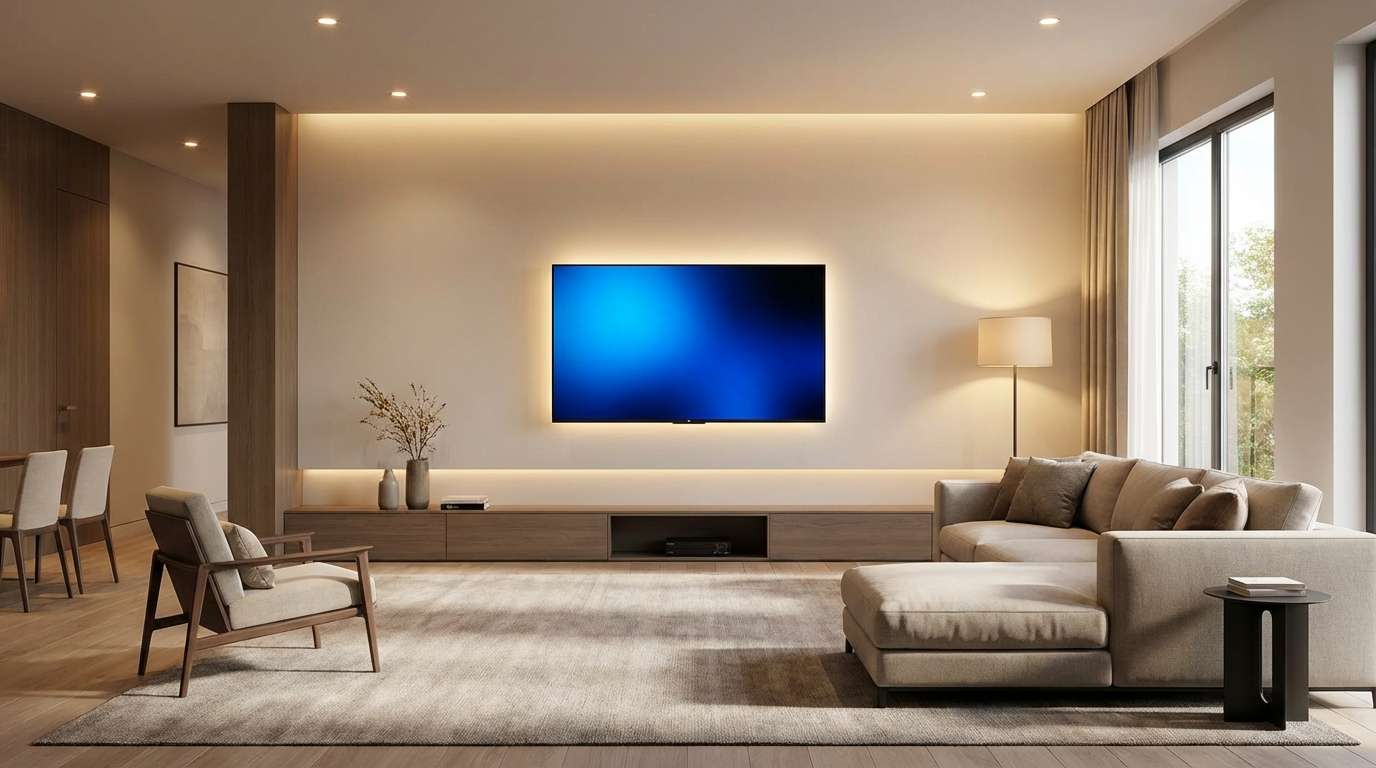
Perfecting Your TV Wall Mount
Ready to upgrade your living room? TV wall mounting frees up space, looks sleek, and improves viewing angles. But before you start drilling holes in your drywall, review these 6 essential tips from professional electricians.
6 Crucial Considerations for Installation
Hanging a flat-screen isn’t as simple as driving a few screws with a drill. You need to account for sight lines, building materials, and electrical code compliance. Here is what you need to research before purchasing your TV bracket:
Choose Your Mount Bracket
A fixed or tilting mount will hold your TV close against the wall holding it securely in place while tilting down slightly—ideal for above a fireplace. An articulating mount features a retractable arm allowing you to pull the TV out and swivel it toward various seating areas.
Plan for Connected Devices
What needs to be connected? A cable box, Apple TV, soundbar, or gaming consoles like an Xbox or PlayStation? Knowing this dictates how many HDMI cables your installer needs to run through the wall during the project.
Determine Component Storage
Where will those devices live? If you want a clean aesthetic, you can house them in a media console below the screen, place them on floating shelves, or use hidden wireless boxes mounted behind the TV itself.
Determine Viewing Height
Comfort is key. You don’t sit in the front row of the movie theater staring straight up, so don’t subject yourself to neck strain at home. Finding the optimal height relative to your seating arrangement is crucial before mounting.
Acknowledge Your Wall Type
What is your wall made of? Drywall on wood studs, metal studs, lath and plaster, solid brick, or stone? Your wall type dictates the necessary anchors and drill bits, and determines how easily wires can be hidden.
Don’t Violate Fire Codes!
Fire code dictates that high-voltage power cords (like the plug that comes with your TV) CANNOT be run inside or behind walls. Doing so is a major fire hazard. Low-voltage data wires (like rated HDMI) can be hidden, but for power, you need to install a new recessed electrical outlet behind the screen.
The Hidden Danger of DIY Installations
Many DIYers make the mistake of dropping the factory TV power cord behind the drywall to hide it. This is a severe National Electrical Code (NEC) violation and a significant fire hazard due to the jacket not being rated for in-wall heat dissipation. If a fire starts in the wall cavity, your insurance company can deny the claim.
Instead, the safe and legal method is to hire a licensed electrician to run NM-B (Romex) cable within the wall and install a permitted, recessed code-compliant electrical outlet directly behind the mounting bracket.
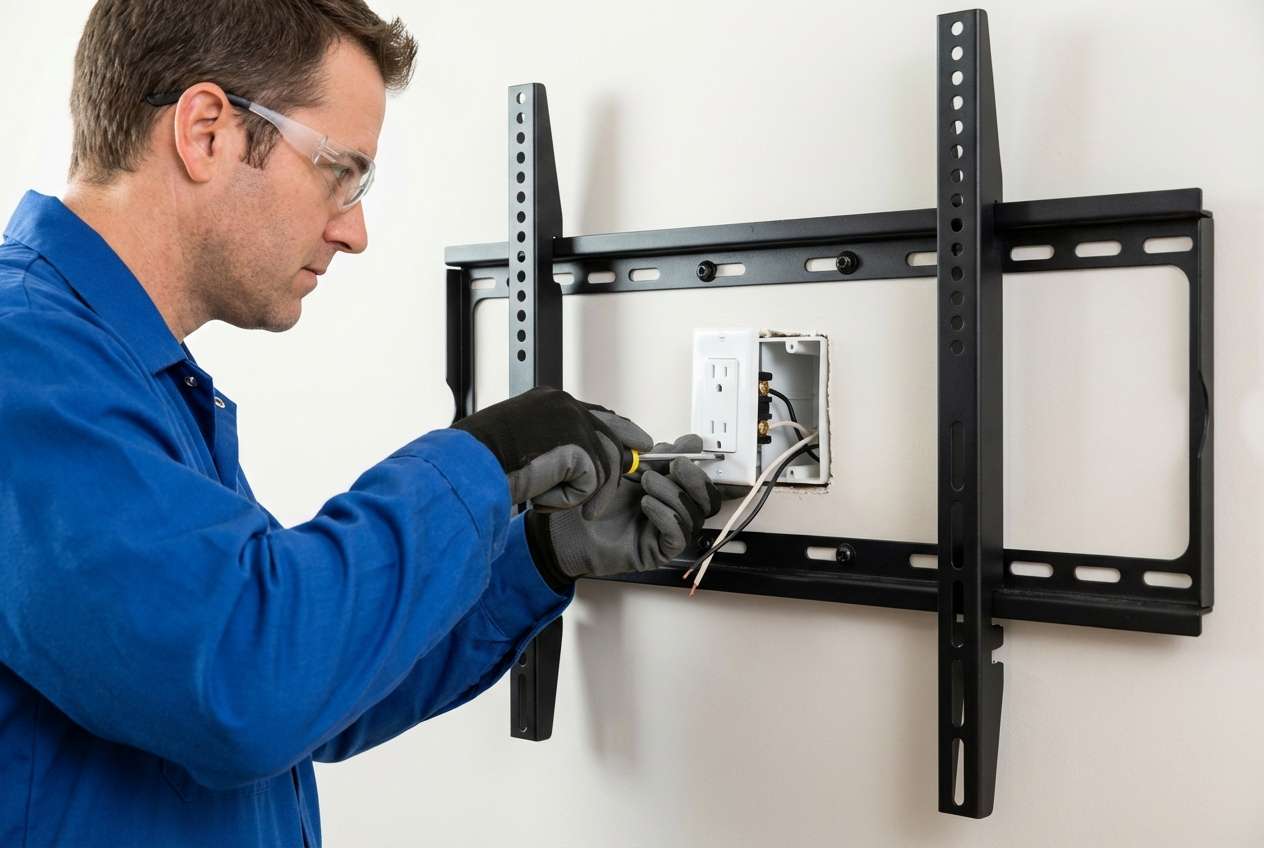
What to Expect From a Professional Install
When you hire Bright Haven Electric LLC, we handle the heavy lifting, the mounting, the wiring, and the code compliance.
- The Right Cables: We recommend CL3-rated HDMI cables, which are approved for in-wall use without requiring a conduit. When calculating length, add your vertical drop, horizontal run, plus an extra 6 feet for slack.
- Electrical Assessment: If adding an outlet behind the TV, we will evaluate your breaker panel first to ensure you have sufficient capacity and the correct breakers.
- Clean Installation: Running cables horizontally across multiple studs requires cutting into sheetrock. As professionals, we minimize damage and can recommend trusted drywall contractors for seamless patching.
- Permitted Work: A typical clean installation of a mount, hidden wiring, and an additional outlet takes under 4 hours, and we handle the necessary electrical permits to protect your home’s value.
Ditch the Extension Cords
Get a clean, professional, and code-compliant TV installation. Let Bright Haven Electric hide those wires safely and securely so you can enjoy the view.
About the Author
Chadwick Ferguson
Chadwick Ferguson is the owner and licensed Master Electrician behind Bright Haven Electric LLC, serving West Central Minnesota from his base in Milan, MN. With deep expertise in residential, commercial, and agricultural electrical systems, he specializes in modern energy solutions including Level 2 EV charger installations, automatic standby generators, and comprehensive electrical panel upgrades.
Chadwick is committed to providing safe, code-compliant, and reliable electrical work to his rural Minnesota community. As the author of the BHElectric blog, he shares practical insights and expert guidance to help homeowners and businesses navigate the complexities of their electrical systems.